

A historical and critical study · Research draft · 9 October 2026
Evidence, confirmation, characteristic value and uncertainty in the homeopathic literature
Roger van Zandvoort
A grade promises to distinguish stronger knowledge from weaker knowledge. Yet the literature of homeopathy has used grades to express several different things: how often a symptom was observed, how convincingly it was attributed to a substance, how frequently it was reported as cured, how characteristic it seemed, and how useful it appeared in selecting a remedy. The printed mark is compact. The reasoning behind it is not.
This study asks what authors actually wrote about grading, including their reservations and proposals for improvement. It considers remedy–symptom grades, the evaluation of symptoms within a materia medica, the weighting of symptoms in an individual case, and the assessment of the evidence supporting a clinical observation. These subjects intersect, but their distinctions must remain visible. The historical enquiry begins independently of Curar and Complete Repertory. The historical sequence leads to Roger van Zandvoort’s implemented historical case counts and a critical comparison of the alternatives. A comprehensive comparison with the existing repertory grades remains a later task.
The present article is a substantial first research draft, rather than an assertion that every relevant publication has been read. Original German and English witnesses, local books and articles, French and Spanish discussions, Portuguese literature, and recent research provide its foundation. Other languages are included in discovery, but discovery coverage and verified evidence are different achievements. Unresolved witnesses and competing explanations remain part of the enquiry.
The account follows the dates of the inspected publications, from Bönninghausen’s 1846 preface through recent methodological proposals. Later commentaries on an earlier author are identified as retrospective interpretations, not silently treated as that author’s original position. Undated material is collected separately. The final assessment draws the strands together without forcing their different meanings into one scale.
1. 1846 · Bönninghausen: relative ranks and acknowledged uncertainty
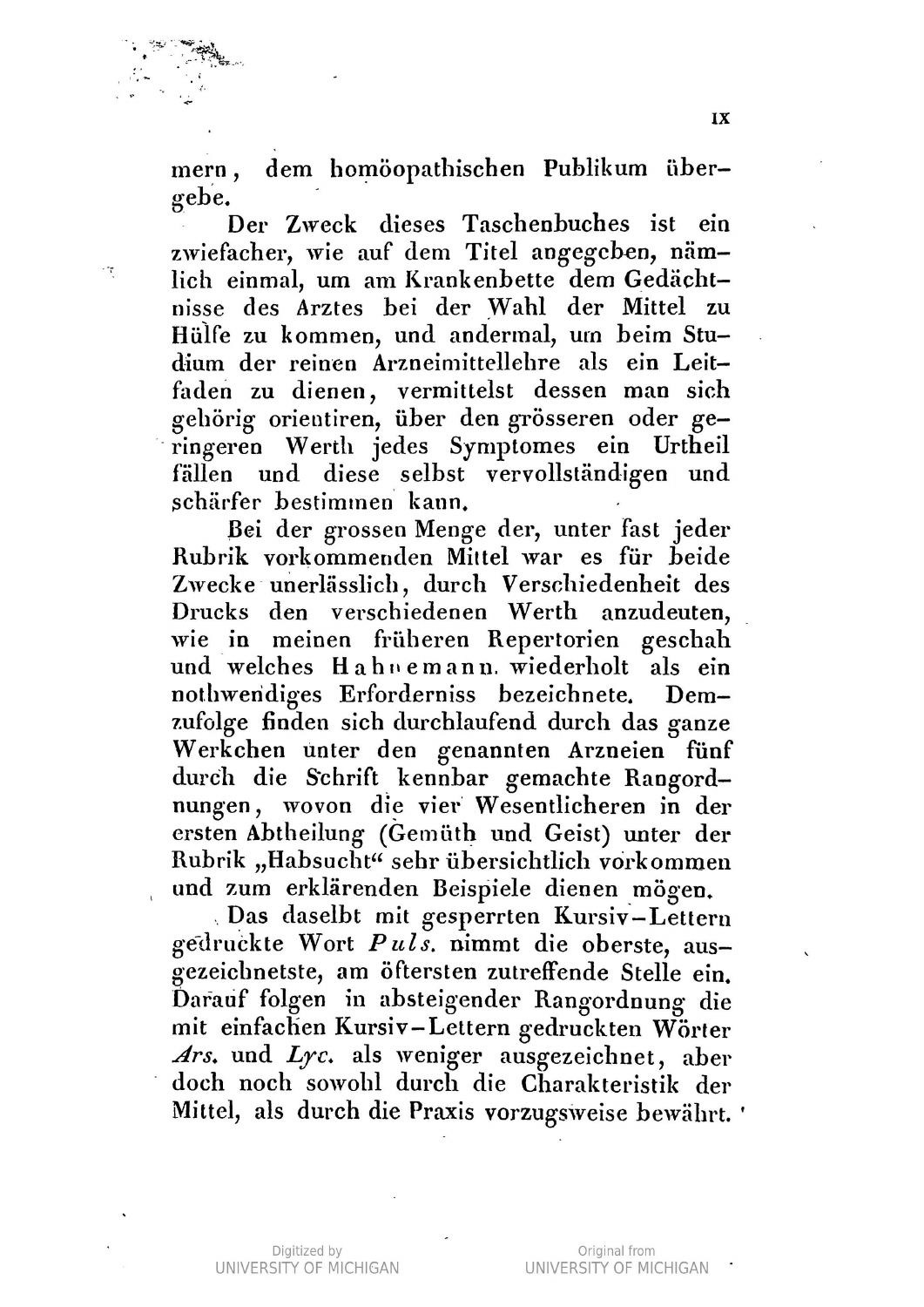
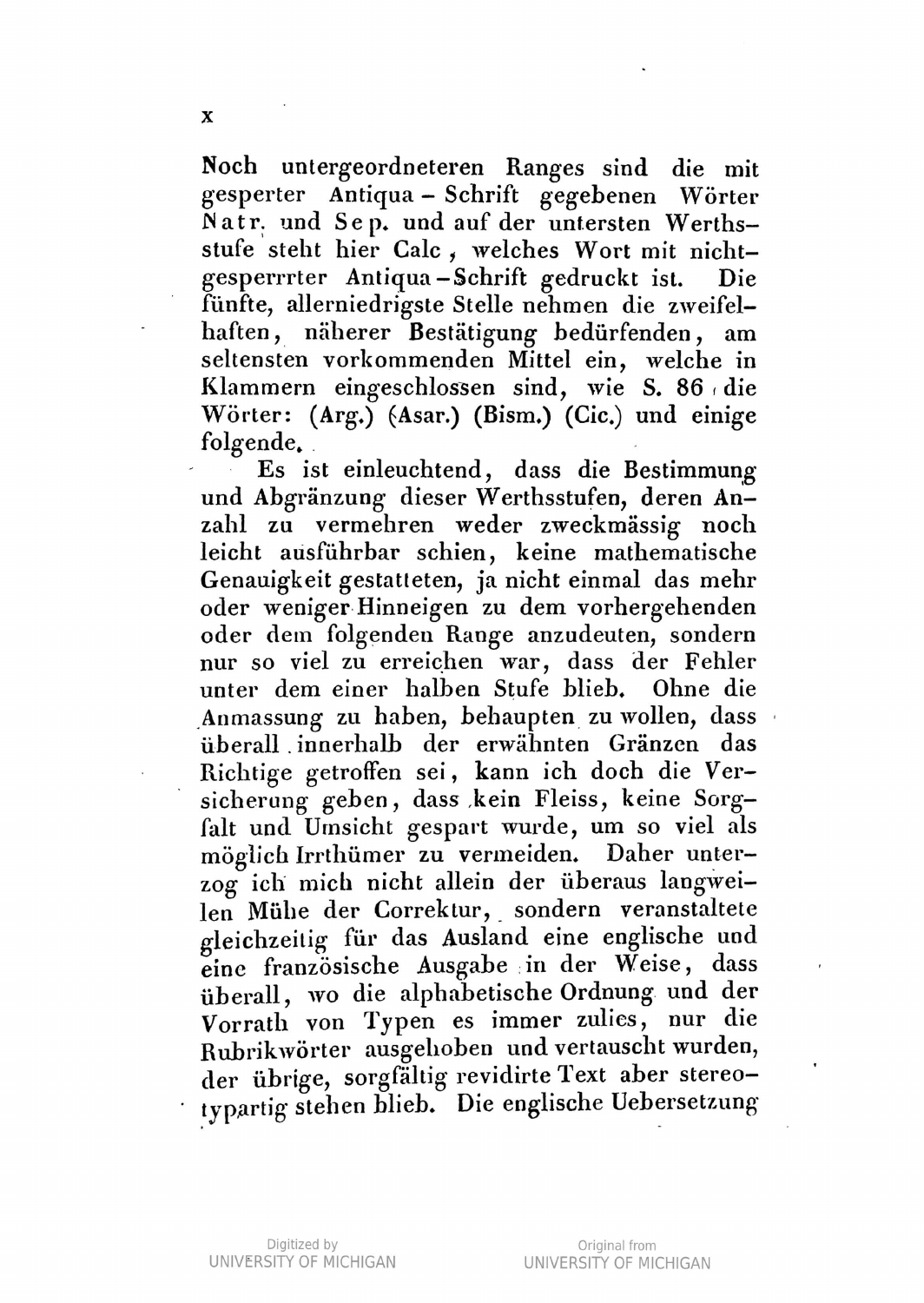
The German preface to Bönninghausen’s Therapeutisches Taschenbuch of 1846 is unusually valuable because it explains the ranks in the author’s own words. On printed page IX he describes five typographically distinguishable ranks. Four principal ranks are illustrated under “Habsucht.” The highest uses spaced italics; the next uses ordinary italics. On page X, spaced roman type and ordinary roman type complete those four ranks. Parentheses identify the fifth, lowest category: doubtful, infrequently occurring remedies requiring further confirmation. [1]
His treatment of uncertainty is explicit. The brackets preserve a doubtful association while distinguishing it from more established material. They do not simply denote a weaker intensity of suffering. Equally significant is his admission that the determination and separation of the ranks permit “keine mathematische Genauigkeit”: no mathematical precision. The accompanying discussion presents careful editorial judgement with acknowledged limits, not a calibrated probability scale. [1]
A later numerical representation must therefore be read with care. Five visible categories do not necessarily mean five equally established positive grades. A category set aside for doubt has a different function from the four principal ranks. Similarly, a modern sequence numbered 1–5 and another numbered 0–4 may represent related typographical material without giving the same meaning to their numerals.
Figure 1. Therapeutisches Taschenbuch (1846), preface pp. IX–X. The sequence of typefaces and the bracketed category are visible in the original German explanation. Page X also states the limit on mathematical precision. Source [1].
2. 1850 · Jahr: two directions of comparison
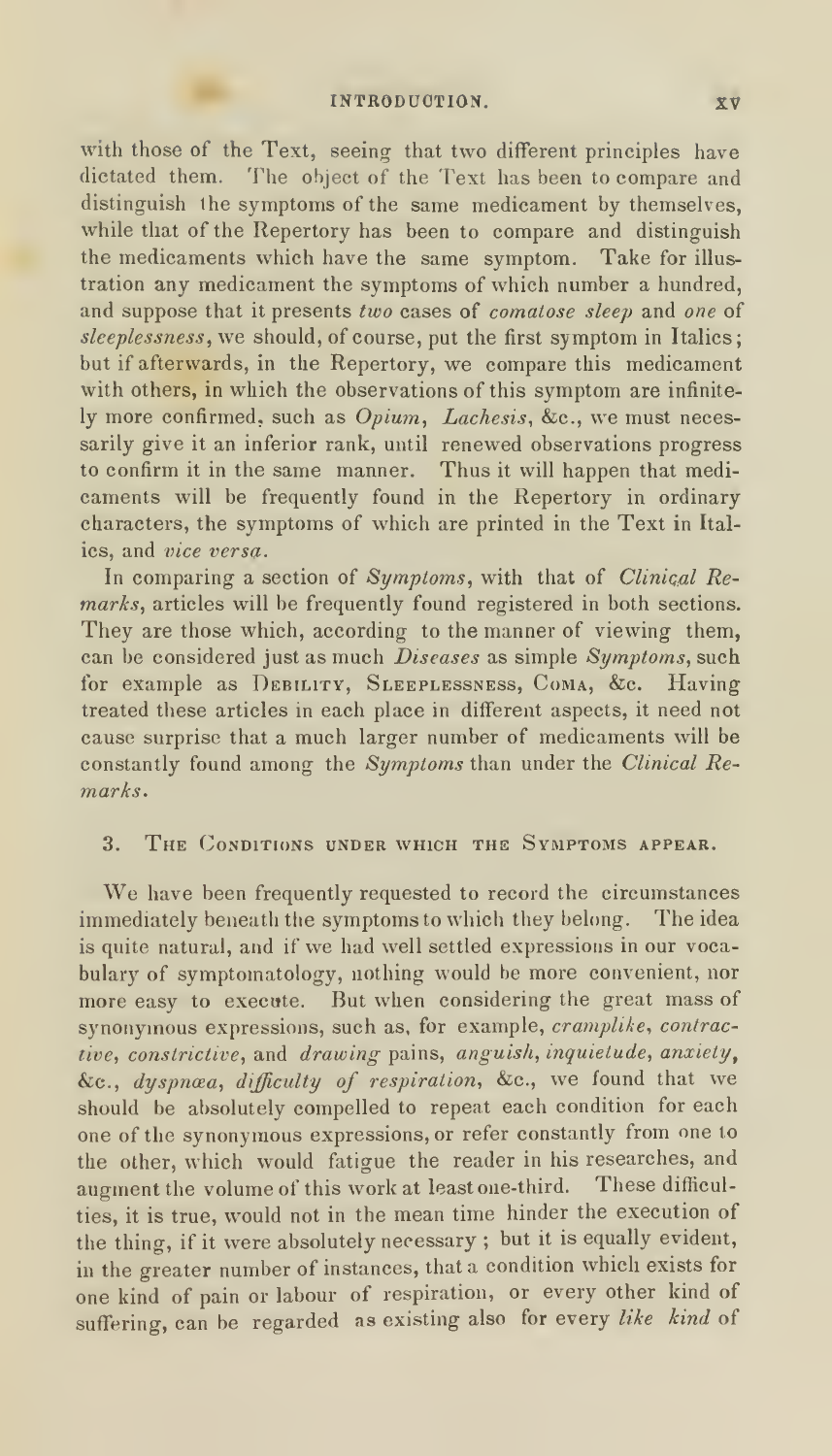
Jahr’s introduction in the 1850 New York repertory makes a distinction that deserves a central place in any future theory of grading. On printed pages xiv–xv, he explains that typographical emphasis in the materia medica compares symptoms belonging to the same medicine, whereas emphasis in the repertory compares different medicines associated with the same symptom. These are different directions of comparison. [2]
A symptom can consequently be prominent within one remedy’s account and still receive an inferior relative position among the remedies listed under that symptom. Jahr explicitly allows ordinary type in the repertory for a symptom italicised in the materia medica, and the reverse. The typography cannot be transferred mechanically from one work to another. [2]
Jahr also says that he considered abandoning italic distinctions because they could mislead. The totality could favour a remedy lacking the typographical emphasis given to competitors. He retained italics chiefly to help the reader find more confirmed associations among numerous entries, while warning against granting the distinction excessive attention. These are qualifications within the grading explanation itself, not objections imposed by a later critic. [2]
This witness separates three matters often collapsed in later summaries: prominence within a remedy, comparative confirmation across remedies, and suitability for a particular patient. A single display convention can aid navigation without deciding all three. Any historical account claiming that an italic symptom must become an italic repertory entry needs to confront Jahr’s contrary explanation.
Figure 2. Jahr’s 1850 New York repertory, introduction p. xv. The upper passage distinguishes comparison within one medicine from comparison among medicines and explains why italics need not transfer between materia medica and repertory. Source [2].
3. 1874 · Allen: observation types and editorial verification
Allen’s introduction describes several evidential sources: experiments on healthy individuals, poisonings, and cautiously admitted observations after administration to the sick. A small cipher identifies a limited class of repeatedly clinically verified symptoms not observed as drug effects. The introduction also describes contributions of verification marks and italics by named colleagues. This records provenance and editorial judgement; it does not establish a universal conversion from an Allen star into a repertory number. [8]
4. 1879 · Hering and Cowperthwaite: production, cure and characteristic value
Hering’s 1879 first volume distinguishes a symptom reported as cured from one both produced and cured. The preface grants greater intrinsic value to the latter, while maintaining that cured-only symptoms should not be ignored. It also envisages further experience supporting a rise in degree toward characteristic status. This describes an accumulating assessment, with different kinds of evidence retained. [3]
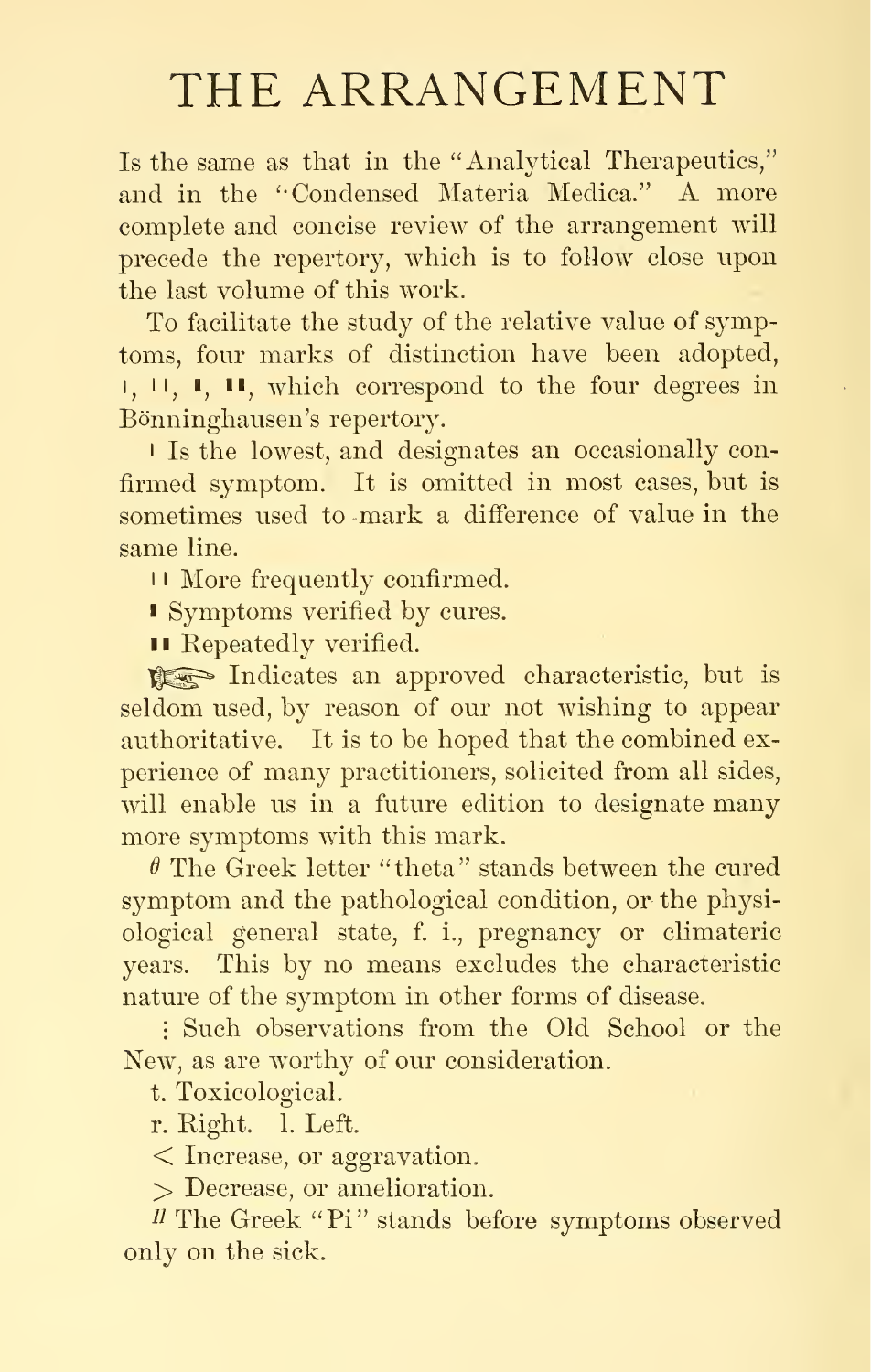
“The Arrangement” gives four marks: a single light line for an occasionally confirmed symptom, two light lines for more frequent confirmation, one heavy line for verification by cures, and two heavy lines for repeated verification. The lowest mark is often omitted. A separate pointing-hand symbol identifies an approved characteristic; Hering explains its sparing use as reluctance to appear authoritative. [3]
These marks are not interchangeable. The hand, the degree strokes, the toxicological indicator, the mark for observations on the sick, and the theta separating a cured symptom from its pathological or physiological context serve different purposes. A transcription reducing them to asterisks or numerals may hide distinctions that the original page makes visible.
There is an additional limit: the legend tells us what a mark means, but does not by itself identify the cases behind every marked statement. An editorial degree is evidence of the author’s assessment. The independent observations supporting that assessment require their own recovery. The legend supplies a semantic key, not the complete evidential history of each entry.
Cowperthwaite’s selection of characteristic symptoms
Cowperthwaite’s first-edition preface divides symptoms into four conceptual groups. The highest combines frequent occurrence in provings with repeated verification in practice; the next combines less frequent proving occurrence with frequent clinical verification. Two further groups are less characteristic or insufficiently verified. His book selects the first two groups, printing the highest in italics and the other in ordinary type. Thus an apparently two-level display rests on a broader selection scheme. [9]
Figure 3. Hering’s Guiding Symptoms, volume I (1879), “The Arrangement.” Four confirmation marks coexist with a separate pointing hand for an approved characteristic. The symbols preserve distinctions that a plain numerical transcription can conceal. Source [3].
5. 1896 · Knerr: recurrence and conformity with the remedy’s character
Knerr’s preface to the repertory of Hering’s Guiding Symptoms repeats the four distinctions but adds a qualification to the double light line: a symptom may be more frequently confirmed, or, if confirmed once, strictly accord with the remedy’s genius. His account therefore gives a role to perceived coherence as well as recurrence. He also explains that his use of degree marks gives prominence to relative values in groups under general rubrics. [7]
This qualification matters because “more frequent confirmation” and “one confirmation plus strong conformity” are not identical evidential histories. They may receive similar emphasis in this author’s presentation, but a later enquiry should preserve which route was taken. Otherwise an interpretation based on consistency can be mistaken for an actual count of independent observations.
Knerr’s insistence on retaining original readings and delicate shades of meaning points to another requirement: grading depends on the identity of the symptom. If several differently qualified observations are fused into a vague rubric, their original meaning may be lost before any numerical calculation begins. [7]
6. 1897–1919 · Kent’s repertory and explanations of grading
The repertory’s early prefaces precede the later expositions considered here. The account follows that sequence, then examines later interpretations and criticism as retrospective evidence. The 1919 date identifies the inspected lecture edition, not an established date of first formulation.
The criticism that Kent’s grading is insufficiently documented needs a precise formulation. Kent did discuss grades. What is missing from the checked repertory prefaces is an explicit account of how those ideas were applied to the thousands of individual remedy–rubric entries. An explanation of what a grade is intended to mean, a rule for assigning it, and evidence showing why a particular entry received it are three different kinds of information.
What the early repertory prefaces say
The 1897 volume-I preface describes compilation from materia medica and practitioners’ notes. Kent says that he omitted unverified symptoms when he decidedly doubted their consistency, and admitted clinical material when it agreed with the remedy’s nature. He envisages expansion as remedies come into use or receive confirmation and verification. These are important admission and editorial principles. The checked preface does not define the three remedy typefaces, state numerical thresholds, explain the treatment of different source scales, or identify the evidence behind individual grade assignments. The local witness with an 1899 title page repeats this general account. Its title-page year should not be turned into an assertion of a distinct revised edition without further bibliographic evidence. [52] [54]
This supports a limited negative finding: these checked early prefaces do not provide the missing protocol. It does not establish that Kent never explained grading elsewhere, that no relevant manuscript survives, or that every later edition repeats the omission. The third revised edition catalogued by Wellcome is a distinct 1924 Chicago publication. The follow-up examination below separates its catalogue identity from prefatory text preserved in a later edition. [59]
The 1924 third edition: what the surviving prefatory witness adds
Wellcome identifies the original as Chicago: Ehrhart & Karl, 1924, third revised edition, xiv + 1,423 pages. Its catalogue record does not supply a digitised copy. An original 1924 scan has not yet been located in the searched local holdings or online catalogues. Consequently, the original’s complete front matter and remedy typography remain uncollated. [59]
A later B. Jain enriched Indian edition, explicitly reprinted from the sixth American edition, preserves the third-edition publisher’s preface on printed page viii. Ehrhart & Karl attribute to Kent a claim of extensive rearrangement, corrections, added remedies and verification of every symptom. They also credit Clara Louise Kent with supervising proofs. This is additional editorial testimony, distinct from the early author’s preface; it is not an original 1924 page witness. [67]
The reproduced third-edition preface supplies no typeface legend, numerical threshold, definition of verification, or entry-level evidence trail. Its general assurance of verification therefore does not resolve how individual grades were assigned. The adjacent fourth-edition note, dated January 1935, acknowledges Gladwin, Schmidt, Sherwood and others: later editions require their own collation. The new finding narrows the gap to an operational grading protocol and its application; it does not justify saying that the third edition contains no relevant editorial explanation. [67]
What Kent’s lecture actually supplies
The detailed passage occurs in Lecture XXXIII, continuing The Value of Symptoms, on printed pages 251–252 of the local 1919 edition. The preceding Lecture XXXII supplies related context. Kent divides general, common and particular symptoms into three grades and distinguishes recording, confirmation by reproving, and verification in patients. For the strongest class, he speaks of all or the majority of provers, supplemented by extensive clinical verification over years. The second class contains observations from fewer provers that have been confirmed and occasionally verified. The lowest class includes a strong but unreproved observation, an observation verified clinically, or certain clinical observations not in the proving. [4]
His practical illustration is Pulsatilla [puls.] being worse in a warm room: repeated proving observation, further confirmation and clinical verification justify the highest class. He then applies the same reasoning to a hypothetical bladder particular and distinguishes that class from the symptom’s position in the hierarchy of general, common or particular symptoms. These examples describe his intended reasoning. They do not supply the prover lists, case series or editorial records for each printed repertory entry. [4]
The account is qualitative. “All or the majority,” “extensively,” “for years,” “a few,” and “occasionally” do not specify one reproducible numerical rule. The passage does not settle the minimum number of independent provers, the number or quality of clinical verifications, how negative observations affect a grade, or what to do when only one or two provers were available. A reader cannot retrospectively calculate every repertory grade from these words alone.
Bidwell does not reproduce precisely the same rule
Bidwell’s 1915 explanation identifies capitals and heavy type as first or highest grade, italics as second, and small letters as third. But his recurrence wording differs: every prover for the highest, a majority for the middle, and a few for the lowest, followed by verification. Kent’s highest category already permits a majority; Kent’s middle category refers to a few. Substituting Bidwell’s familiar teaching formula for Kent’s wording therefore changes the boundaries. [5]
Category, strongest firstKent’s Lecture XXXIIIBidwell’s 1915 explanationHighestAll or majority; extensive verificationEvery prover; subsequently verifiedMiddleFew provers; confirmed and occasionally verifiedMajority; subsequently verifiedLowestSeveral different proving or clinical routesFew provers and verified clinical material
This difference is not proof that Bidwell misrepresented Kent deliberately, nor proof of an undocumented change in Kent’s policy. It establishes that the two formulations are not identical. Their relationship requires investigation. Currim’s later exposition also adds interpretive language about pathological states associated with a remedy; those additions should be attributed to that exposition rather than inserted into a quotation from Kent. [58]
The compiler’s account does not fill the conversion gap
In The Development and Formation of the Repertory, preserved here through a later reprint, Kent describes a compilation from preceding repertories and the screening of clinical observations against provings. He rejected observations he considered contradictory and admitted consistent ones. This explains part of the selection process. It does not supply a conversion table recording how each predecessor’s typefaces and evidential distinctions became his three displayed classes. [55]
A source book’s emphasis might indicate recurrence, characteristic value, clinical experience or editorial approval. When those marks enter one three-type display, their origins can become indistinguishable. That is a reconstruction problem: for any entry, did Kent preserve an inherited mark, reassess the evidence himself, generalise several related observations, or incorporate a colleague’s experience? The printed type alone cannot answer.
Two disputed grades: what the sources now establish
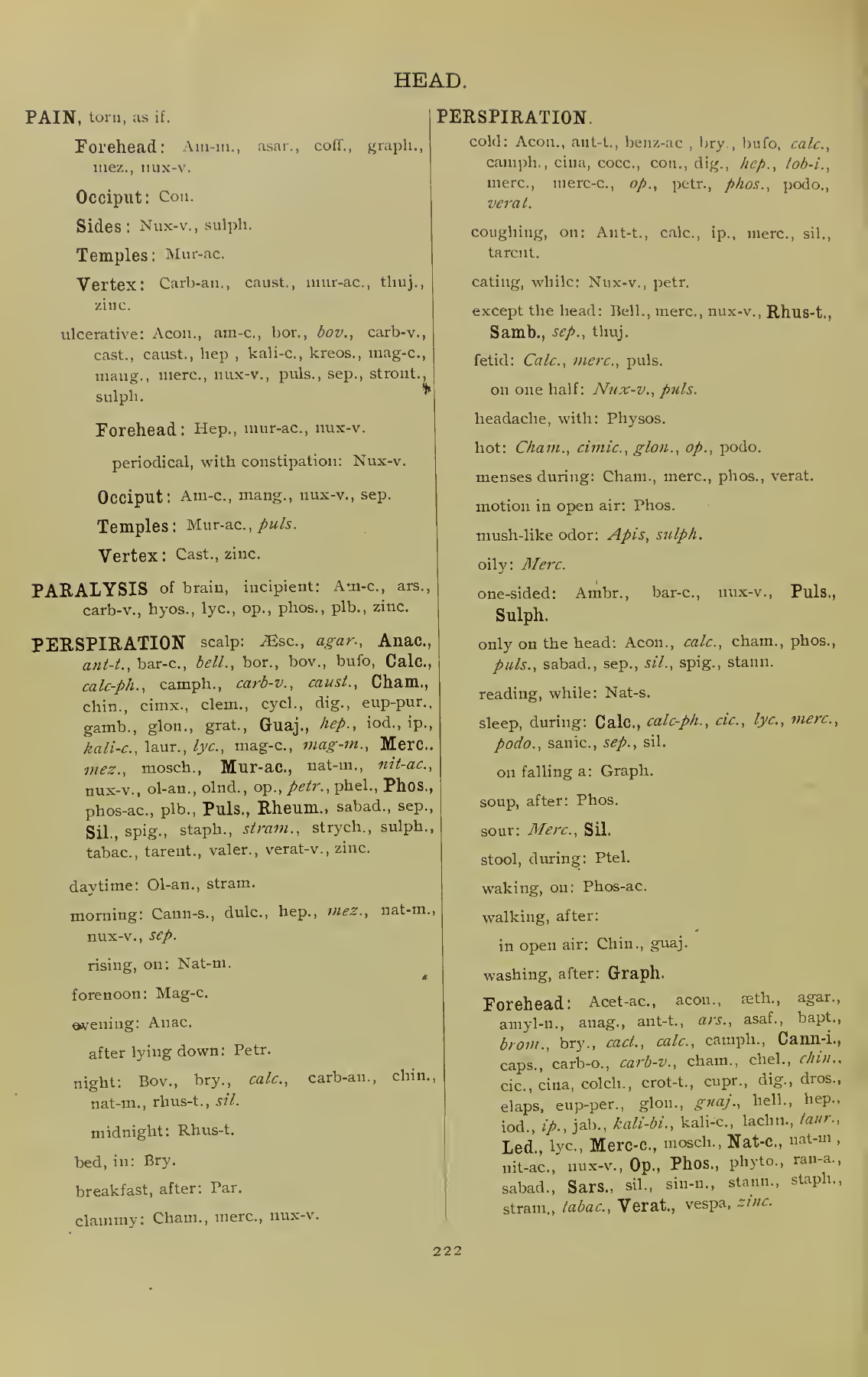
The original 1897 volume-I page 222 prints Anacardium orientale [anac.] in the highest type under scalp perspiration. Volume II, page 747, prints Kali sulphuricum [kali-s.] in the highest type under rattling respiration. Both marks have been inspected in the original scans. These are original printed decisions, not merely errors introduced by a later edition. Neither page supplies its supporting observations or a source-scale conversion. [52] [53]
Rob Willemse challenges both examples in 2009. An examination of earlier sources produces different findings for the two remedies. Kent had a demonstrable, published clinical basis for Kali sulphuricum before 1897; the highest emphasis remains difficult to reconcile with his later published proving-and-verification explanation. Anacardium has a genuine early head-perspiration observation and a pre-Kent repertory entry, but the retrieved chain does not substantiate its highest emphasis. Neither conclusion proves that the association is false, or that Kent acted dishonestly. Inclusion, strength of emphasis and proof of therapeutic causation are separate questions. [57]
1835–1896: the Anacardium observation, its repetitions and its missing confirmations
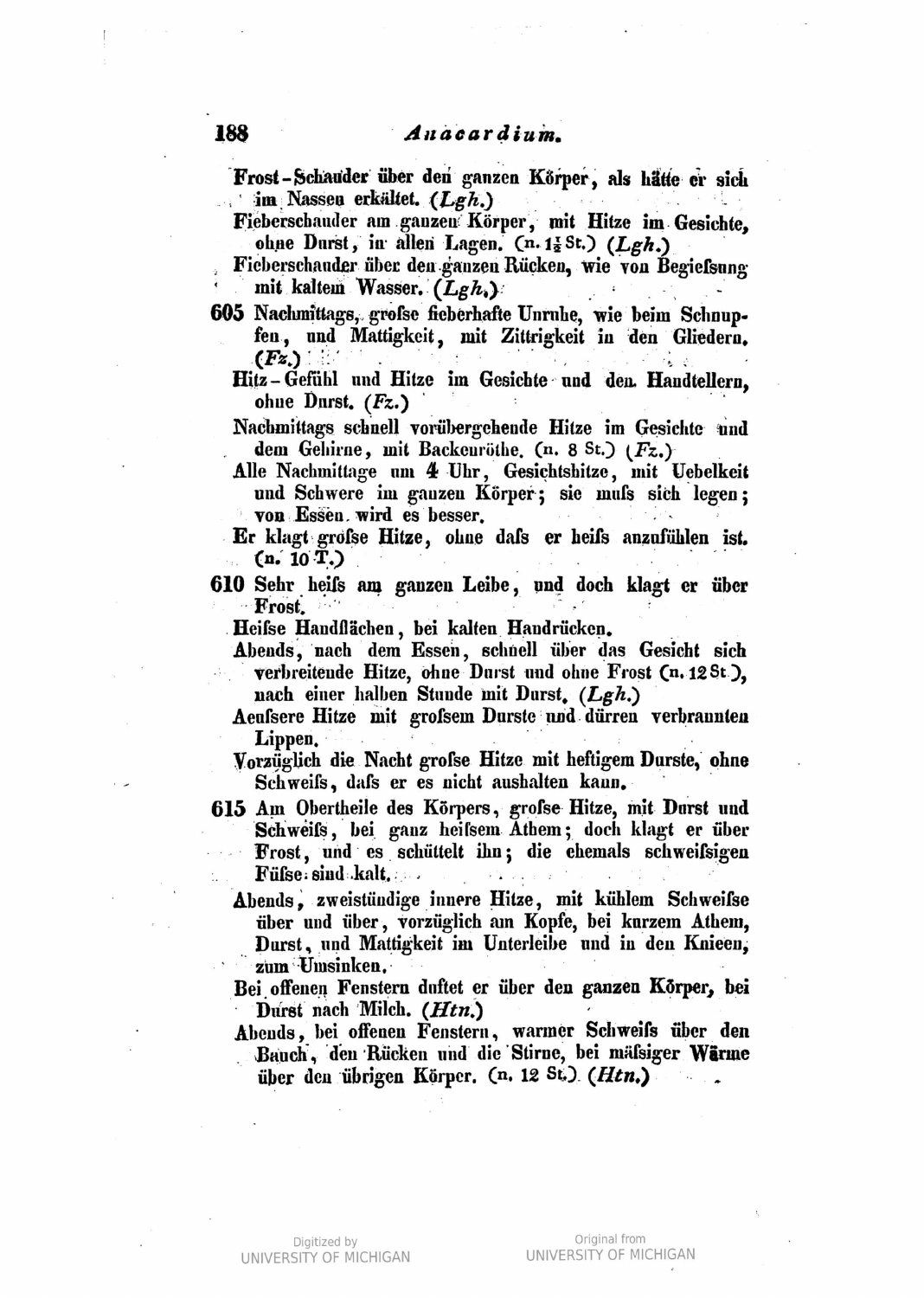
Hahnemann’s German Die chronischen Krankheiten, volume II (1835), p. 188, contains the relevant observation as symptom 616: evening internal heat lasting two hours, with cool perspiration all over, especially on the head, accompanied by shortness of breath, thirst and marked weakness. The original says “vorzüglich am Kopfe”—especially on the head. This is good documentary support for a head-perspiration association, although the later general rubric omits the time, coolness and accompanying symptoms. “Head” also does not identify an exact scalp distribution. The source supports the association more directly than it supports every generalisation of it. [68]
A nearby observation, symptom 618, describes warm perspiration on the abdomen, back and forehead, in the evening with open windows. It bears Hartmann’s abbreviation, Htn.; symptom 616 carries no prover initials. These are two textual observations with different locations and circumstances. They cannot simply be counted as two independent provers of scalp perspiration. Nor does the uninitialled 616, by itself, identify a person or establish how often that person experienced it. Willemse’s description of an isolated proving basis is a reasonable lead, but an exact one-prover numerator and a denominator of all provers have not been reconstructed. [68] [57]
Evidence plate A. Hahnemann, 1835, p. 188. The observation immediately following number 615 is symptom 616; the final observation is 618. The difference between Kopf and Stirne, and between cool and warm perspiration, matters when reconstructing the rubric. [68]
Allen’s Encyclopedia, volume I (1874), p. 327, repeats the relevant head-perspiration observation and attributes its authority to Hahnemann. That establishes transmission, not another patient or another proving. Counting Hahnemann and Allen as two independent confirmations would double-count one inherited record. [69]
The repertories make the history more precise. Bönninghausen’s printed 1833 antipsoric repertory, p. 26, has a sweat rubric under external head complaints, but its inspected list does not contain Anacardium. This finding concerns that printed witness only. Willemse attributes an upgrade to Bönninghausen’s son; the annotated copy, exact addition, date and supporting cases have not been recovered here. A later manuscript addition remains possible, and cannot be verified or disproved by the unannotated printed page. [70] [57]
By contrast, C. von Lippe’s 1880 repertory, p. 35, explicitly includes Anacardium under scalp perspiration. On the inspected page it is upright type, while some other entries are italicised. This establishes that the rubric membership predates Kent. It does not establish that Kent inherited the highest rank, nor does the page give a confirming case. Knerr’s 1896 repertory, p. 1112, also preserves Anacardium under cold sweat with internal heat, without a preceding confirmation stroke on that entry. A missing stroke must not be converted into a numerical zero: Knerr’s notation and omissions require his own legend. These witnesses preserve the association and some of its context; neither supplies the missing strong evidential chain. [71] [77] [7]
Verdict for Anacardium: there is sound historical support for admitting a qualified head-perspiration observation. In the sources examined for this audit, there is no reconstructed majority-of-provers result, no identifiable series of independent cured cases of this symptom, and no documented decision that explains the jump to Kent’s highest type. The strongest grade is therefore unsubstantiated by the recovered evidence. That is narrower and more defensible than declaring the symptom invented or the grade conclusively disproved. An annotated repertory or a contemporary clinical report could change the assessment.
1877–1895: the Kali sulphuricum evidence before Kent’s repertory
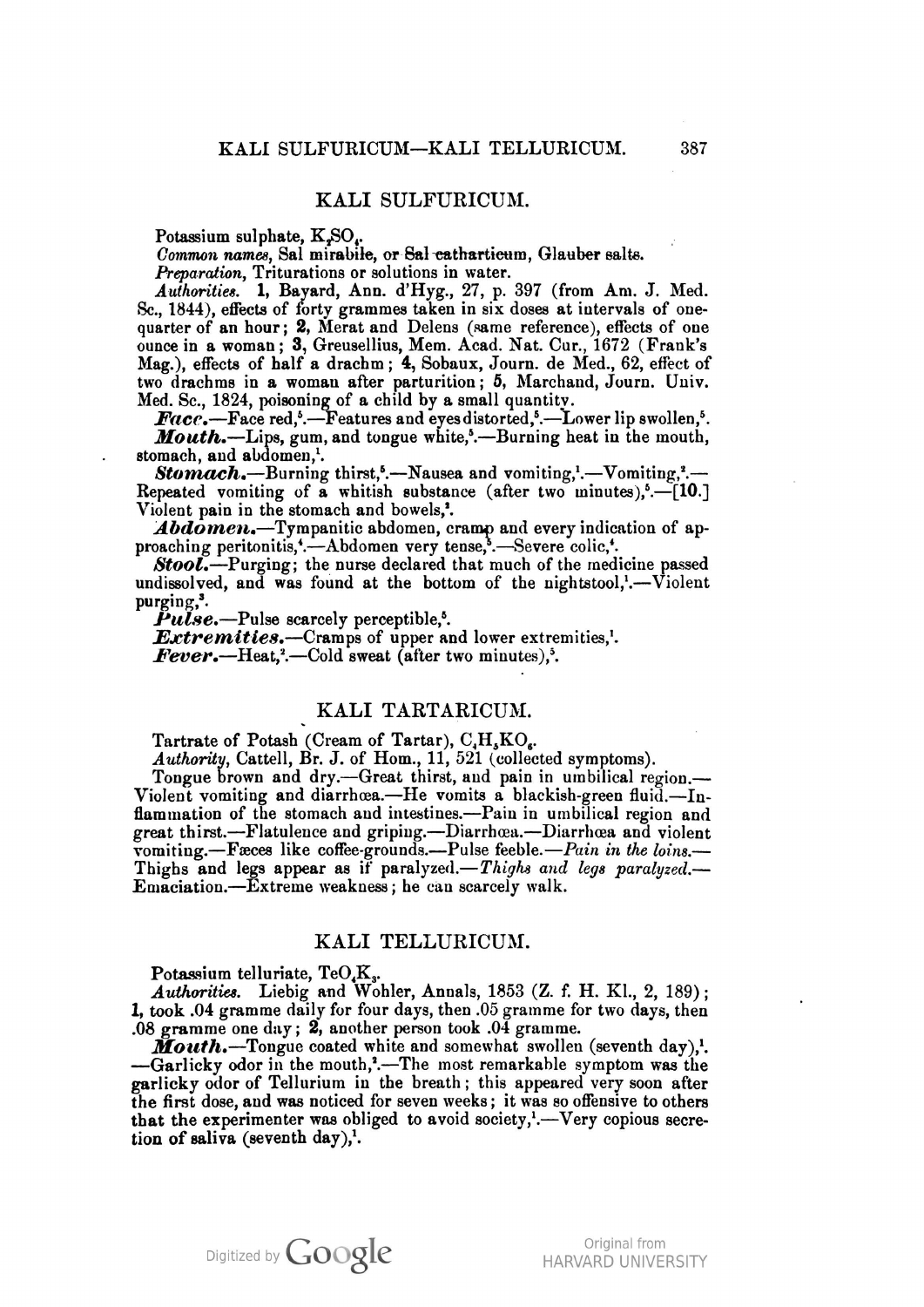
Allen’s volume V, whose title page dates this witness to 1877, contains the entire Kali sulfuricum entry on p. 387. Its numbered authorities concern acute exposure or poisoning accounts; they are not a cohort of five healthy provers. The entry contains no respiratory-rattling observation. The adjacent entry is Kali sulfuratum, a different preparation: its chest symptoms must not be transferred across the heading. This supports a gap in the retrieved pathogenetic basis, without proving that no such observation was ever made anywhere. [73]
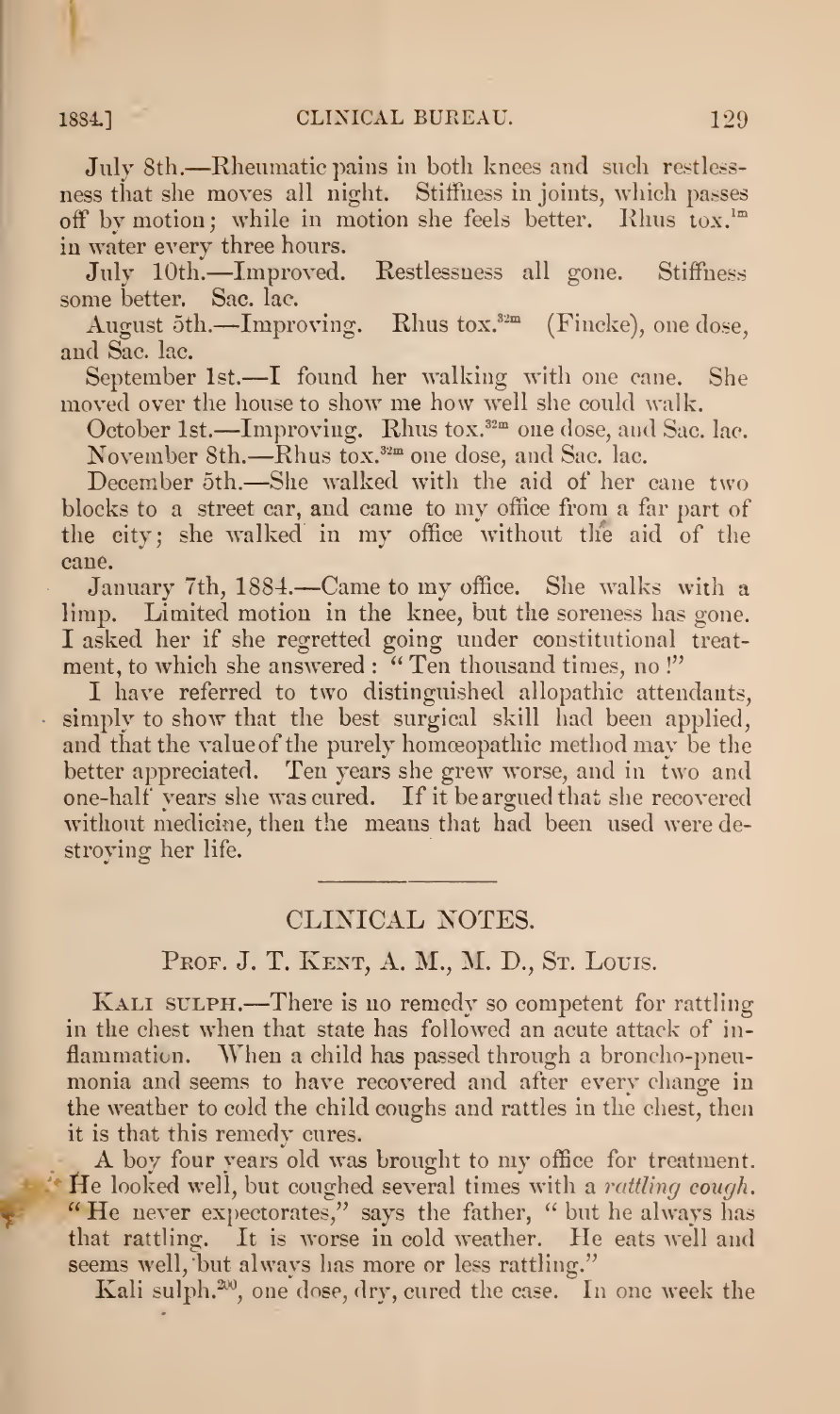
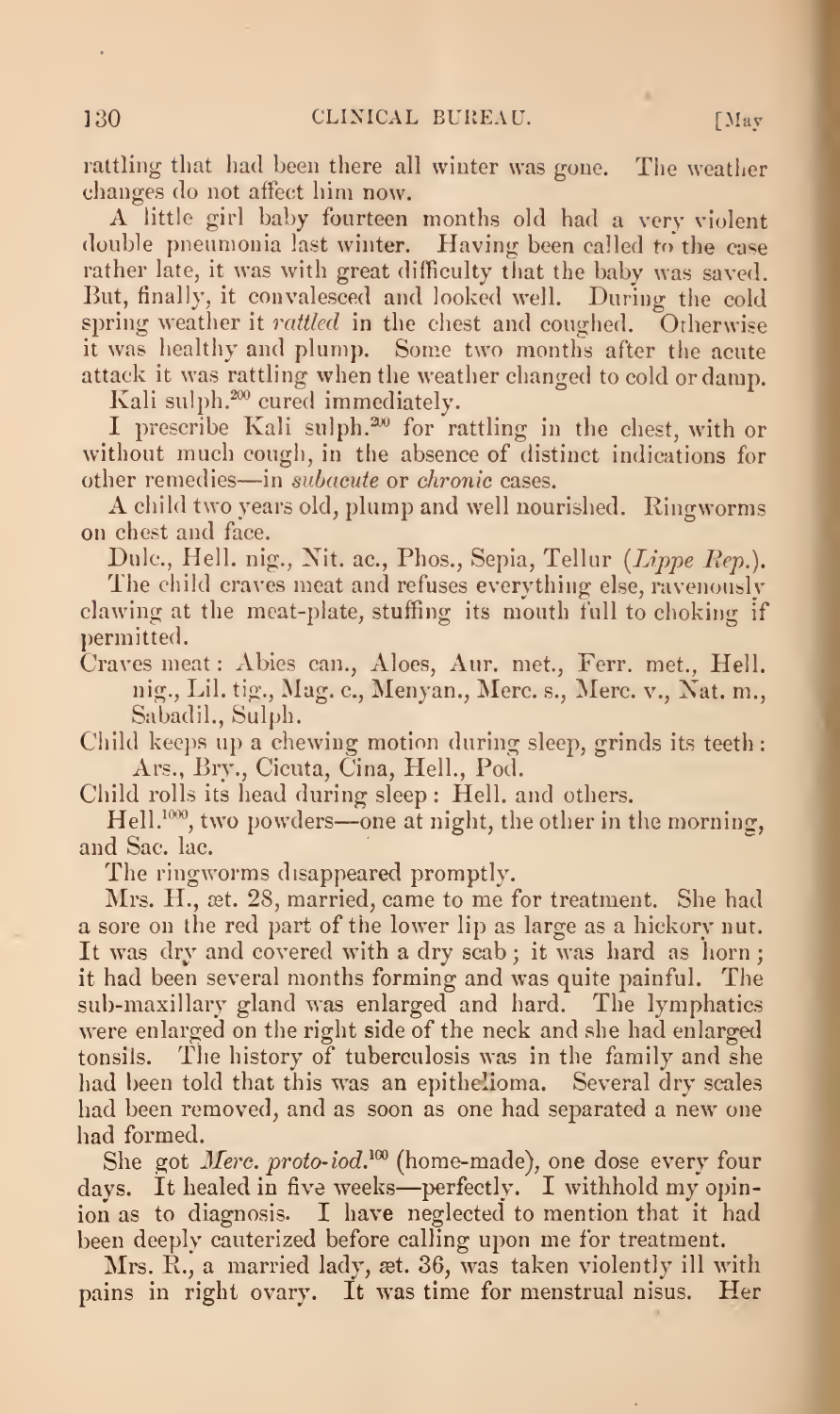
The decisive correction to the earlier account is the original publication of Kent’s own cases. His “Clinical Notes” appeared in The Homœopathic Physician, May 1884, pp. 129–130, thirteen years before the repertory. The later collected writings are consequently not our earliest witness. Kent already recommends Kali sulphuricum for residual chest rattling after acute inflammation, especially in children affected by changes to cold weather, and gives two distinguishable patients. [72] [62]
Three individually described patients published before 1897ReportPresentation and treatment recordedReported outcome and limitsKent, May 1884: boy, four yearsWinter-long rattling and cough, no expectoration, worse in cold weather; otherwise looked well and ate well. One dry dose, 200.Kent says the rattling disappeared within a week and weather changes no longer affected him. Duration of subsequent observation is unspecified.Kent, May 1884: girl, fourteen monthsResidual rattling and cough about two months after an acute double pneumonia; worse with cold or damp weather, otherwise healthy and plump. 200.Kent reports immediate cure. The note does not give a measured follow-up interval. It describes treatment of the residual state, not proof that this prescription cured the acute pneumonia.M. E. Douglass, reprinted 1895: adult manRecurrent asthma; current attack with laboured breathing, thick yellow expectoration and much rattling mucus. 3x trituration, five grains hourly.His wife reported substantial relief before night, fairly good sleep and return to business the next morning. This documents short-term improvement, not permanent cure of recurrent asthma.
In Roger van Zandvoort’s internal historical case count, these represent three patient-level clinical reports from two clinicians: two reported cures and one reported improvement. If “confirmation” includes a favourable clinical response, the count is three; if restricted to explicitly reported cures, it is two. The corresponding cured-cases PROSA sources are Kent’s “Clinical Notes,” The Homœopathic Physician 4 (May 1884), pp. 129–130 (source 6858), and Douglass’s “Asthma,” The Homœopathic Recorder 10 (1895), p. 279 (source 8055). Their 52 rubric-linked PROSA rows do not represent additional patients; Clarke’s repetition of Douglass likewise adds no independent case. [72] [76]
These are historical reports of treatment and outcome, not controlled demonstrations that the medicine caused recovery. Kent’s two cases are nevertheless direct evidence of his experience and conviction before 1897. They make an account of the entry as wholly baseless or merely a late retrospective assertion untenable. His preceding general recommendation is not an additional countable patient, and the 1926 republication does not create two more cases. [72] [76]
Evidence plate B. Kent’s original clinical notes, May 1884, pp. 129–130. Read the beginning at the bottom of the left page and its continuation at the top of the right page. These pages establish the pre-1897 clinical basis; they do not state a repertory grade. [72]
Edmund J. Lee discussed the problem in 1888. In “The Characteristics of Ten Tissue Remedies,” he regarded the available Kali sulphuricum proving material as inadequate, while describing its clinical use for loose rattling cough persisting after the other symptoms had subsided. Thus the tension between weak proving evidence and asserted clinical usefulness was already explicit before Kent’s repertory. The two Wesselhoeft cases following this discussion concern nasal disease, not two additional confirmations of chest rattling. The original article is in volume VIII, April 1888, pp. 169–178, with the relevant discussion on pp. 173–174; Willemse’s cited volume/issue needs correction. [74]
Hering’s Guiding Symptoms, volume VI, provides another important contemporary distinction. Its copyright page dates this volume to 1888, despite the library filename carrying 1879. The Kali sulphuricum chapter opens with “Needs proving.” Yet its respiratory section includes loose rattling phlegm and coarse rales, marked according to Hering’s clinical-confirmation system. Strong clinical emphasis and a stated need for proving coexist within the same chapter. This could help explain the historical availability of an emphatic clinical tradition; it does not prove that Kent copied or converted a particular Hering mark. [75]
Douglass’s asthma report appears on p. 279 of the 1895 Homœopathic Recorder, credited to the Southern Journal of Homœopathy. The earlier source issue remains to be located, but the inspected 1895 reprint already establishes publication before 1897. It supplies a third distinct patient and a second reporting clinician. The overlap with Kent is rattling respiratory mucus; the pathology, expectoration and circumstances differ. It should corroborate that broader association without being presented as a replication of Kent’s exact post-pneumonic state. There is no evidence here that Kent actually read or used this particular report. [76]
Evidence plate C. Allen’s 1877 entry and the opening of Hering’s 1888 chapter. The available clinical tradition must be distinguished from a verified proving of rattling respiration. [73] [75]
Verdict for Kali sulphuricum: the clinical basis for inclusion and for Kent’s personal confidence is substantially documented before 1897. The recovered material does not demonstrate rattling in all or a majority of provers, and it does not supply a quantified, extensively followed clinical series. Consequently, it supports clinical prominence more convincingly than the highest grade under a strict proving-plus-verification rule. Calling the entry groundless would overlook the 1884 evidence; calling the highest grade fully proved would overlook the proving gap.
What standard can fairly be applied to Kent?
Kent’s Lecture XXXIII, checked in the 1919 edition, places certain clinical observations absent from provings in the lowest class, even when another observer has confirmed them. His highest class combines broad proving recurrence with extensive clinical verification. Read literally against those descriptions, the recovered Kali sulphuricum evidence fits the clinical route better than the highest proving-based route. Anacardium’s recovered chain also falls short of the highest-class requirements. Kent calls the strongest class “first”; modern ascending grade numbers can invert that terminology. [4]
There is a chronological qualification: this later printed lecture explains Kent’s grading thought but is not itself an 1897 entry-level instruction or editorial receipt. We cannot silently assume that every word of the later formulation governed each earlier assignment. The discrepancy may reflect a clinical exception, inherited emphasis, changing practice, or inconsistent implementation. None has yet been demonstrated as the actual explanation for these two marks.
The conclusions are different at different levelsQuestionAnacardium: scalp perspirationKali sulphuricum: rattling respirationIs the highest type original?Yes, inspected in 1897.Yes, inspected in 1897.Is there pre-1897 support for the association?Yes: early observation and later repertory inclusion.Yes: Kent’s two 1884 clinical reports, contemporary materia medica and a separate 1895 report.Is the highest rank reproducible from the recovered evidence?No; recurrence, clinical confirmations and promotion record are missing.No under the strict later proving-and-verification formulation; clinical confidence is documented.Is Kent’s precise editorial decision known?No.No.
Willemse’s broad conclusion that Kent’s grades are altogether untrustworthy goes beyond what these two examples alone establish. They demonstrate an important auditability problem and a possible mismatch between stated criteria and practice. Establishing the frequency or extent of that mismatch would require a defined sample of entries, the same source checks for each, and explicit handling of unresolved evidence. The newly recovered 1884 reports strengthen the clinical defence of the Kali sulphuricum entry without resolving its grade. [57] [72]
A practical proposal: retain the historical mark and expose its evidence
These examples favour preserving Kent’s printed emphasis as an attributed historical judgement while displaying the evidence beside it. For Anacardium, the record would show the qualified early observation, unresolved unique-prover count, subsequent transmission, and no independent cured case identified in this focused chain. For Kali sulphuricum, it would show two Kent patients reported cured and one Douglass patient reported improved, across two clinicians, with the proving of rattling still unestablished. These are the recoverable records in this audit, not totals for all published literature or all practice.
Roger van Zandvoort’s historical case count is his internal count of cases extracted from published books and periodicals worldwide. It is especially useful here when each extracted case retains its identity, symptom match, outcome and follow-up. Three recoverable patients must not become three proven cures: the Douglass outcome is different. Likewise three appearances of one patient in books remain one patient. A report count can establish the documentary foundation for a grade while retaining the reported outcome and its documentary limitations. [66]
The proposed editorial decision is therefore to retain both original marks in the historical witness, label Anacardium’s highest rank “support not established,” and label Kali sulphuricum’s “documented clinical support; proving-based highest rank not established.” Any new evidence-derived display should keep clinical and proving support separate and publish its decision rule before recalculating emphasis. The next decisive searches are for the annotated Bönninghausen witness and its clinical authorities, original Anacardium proving records and cured head-sweat cases, and Kent’s dated annotations or correspondence concerning the two promotions. The present audit resolves part of the clinical history; it does not close those documentary gaps.
Figure 4. Kent’s original 1897 volume I, p. 222. In the lower left column, Anacardium orientale [anac.] appears in heavy type under scalp perspiration. The image establishes the printed emphasis; it does not disclose the evidence or reasoning behind that assignment. Source [52].
What the lack of information does—and does not—permit
Rutten and colleagues explicitly criticised the missing explanation in Kent’s repertory preface in 2006 and proposed a statistical replacement for absolute occurrence. Their criticism should be read alongside Kent’s lecture, rather than as evidence that no explanation exists anywhere. The larger problem survives that distinction: a qualitative explanation does not establish consistent implementation or allow entry-by-entry reconstruction. [56]
For research purposes, Kent’s printed grades should therefore be preserved as historical editorial judgements with a degree of traceability still to be established. They should not automatically become measured probabilities, exact prover proportions, a known number of cures, or demonstrated treatment efficacy. Conversely, failure to recover a rationale does not demonstrate that the underlying association is false. It means that the rationale remains unknown.
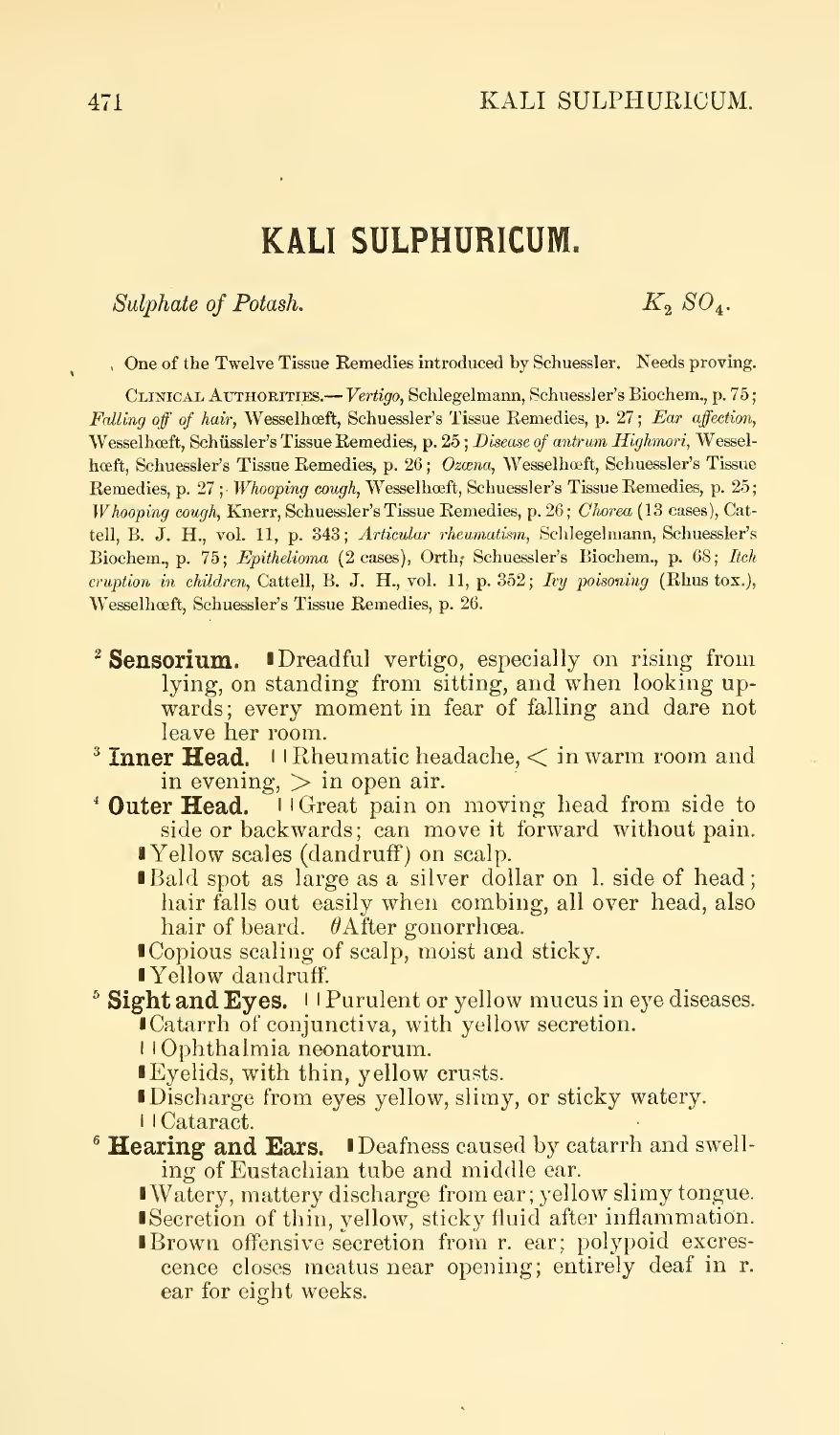
17. Roger van Zandvoort’s internal historical case count
Roger van Zandvoort began applying this method in the early 2000s, primarily for reasons of practicability. Extracting cases from published books and periodicals worldwide provides a workable basis for his internal historical case count: it uses the evidence that can actually be recovered and examined. It records recoverable literature evidence, with proving observations and reported clinical cures or improvements kept distinct and linked to their sources. [63] [65] [66]
The unit is an independently documented person supporting the particular symptom. Reprints and repeated rubric links do not create additional cases. These counts cannot represent all cases cured in practice: not all experience has been published, and not all published evidence has been recovered. Unknown counts remain unknown. [63] [66]
Keeping the count alongside a grade preserves information that typography compresses. For example, the documented proving-only rule places both two and twenty provers in degree 2; displaying the underlying count retains that difference. Clinical counts and combined evidence have separate grading rules. [64]
The purpose is practical: to make the amount and origin of documented support accessible alongside the grade. Each count remains open to revision as further cases are recovered, duplicates identified or source interpretations corrected. Reported cures and improvements retain their original descriptions and the limits of their documentation.
Results visible in Complete Repertory 2027
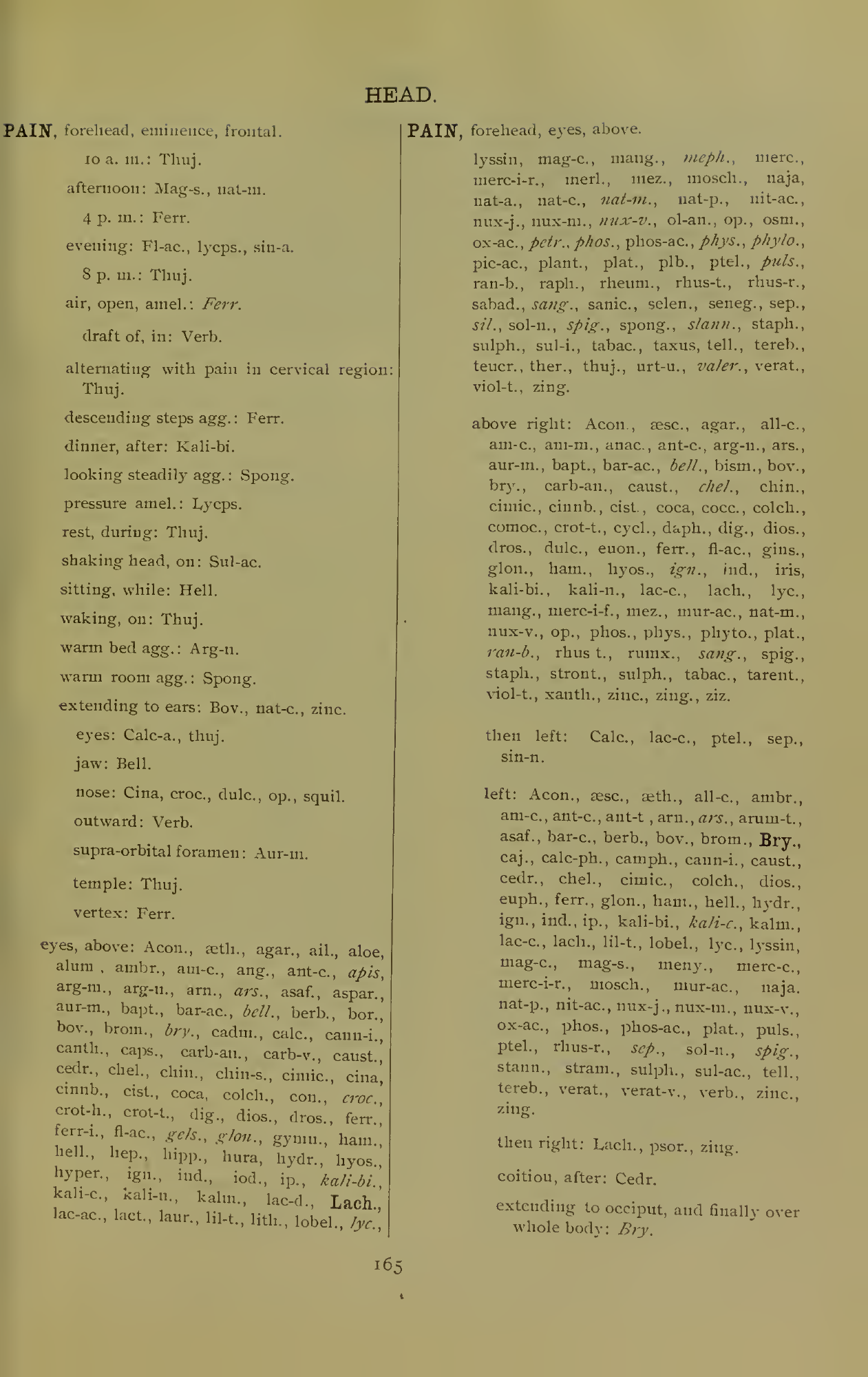
Roger van Zandvoort reports that this practical method is now producing results in the repertory, allowing grades to change as documented support is recovered. The following comparisons use the identifiable CR2027 version-4 package prepared on 10 August 2026 and Kent’s original 1897 volume I. They show differences between those two witnesses, not the date of each intervening editorial change. Plain type in Kent is described here as degree 1 in the modern ascending convention. [66] [78] [81]
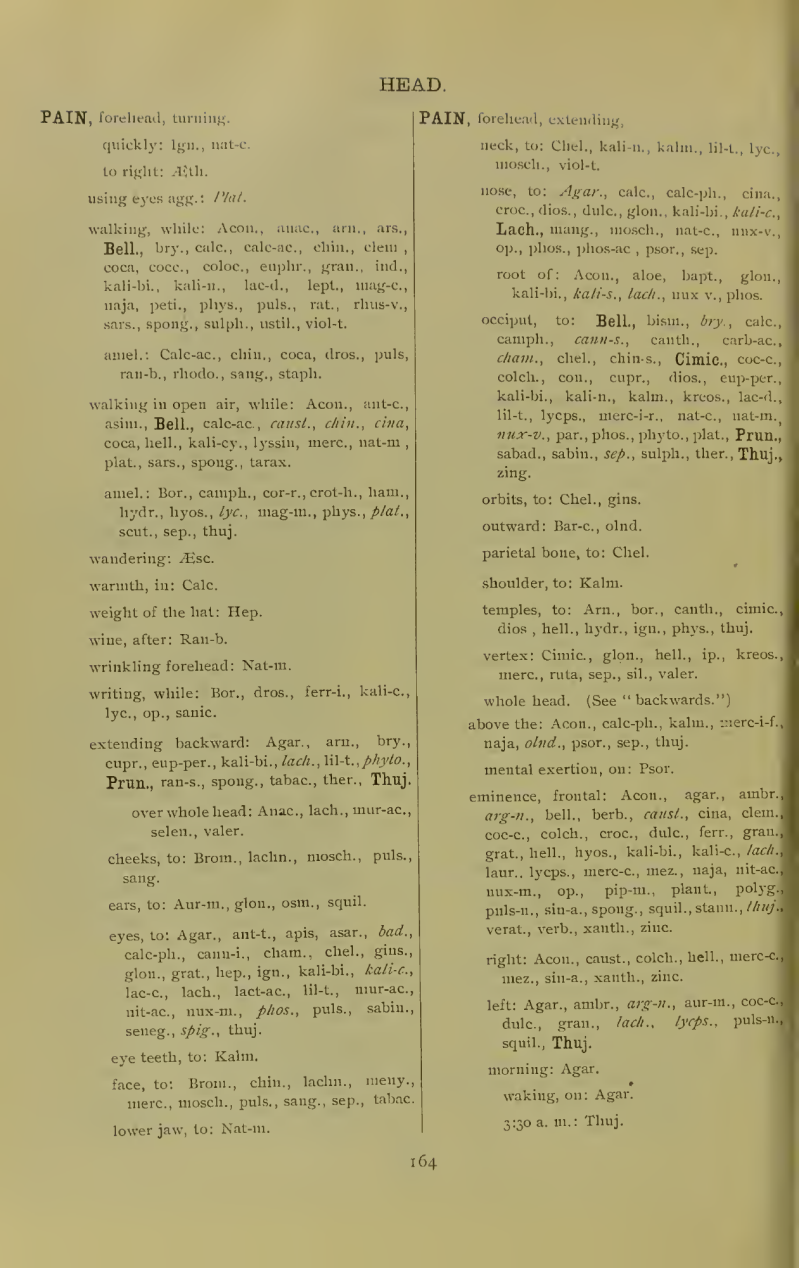
Remedy and rubricKent, 1897CR2027What the source supportsNux vomica [nux-v.] — forehead pain extending to the root of the nosePlain type, p. 164: degree 1Grade 3; recorded counts: 1 cured, 1 proverGypser’s 1987 case explicitly records this symptom and its disappearance the following morning. [79]Nux vomica [nux-v.] — forehead pain extending to the nosePlain type, p. 164: degree 1Grade 3; recorded counts: 1 cured, 1 proverThe broader parent rubric is supported by the same case. This is a second rubric comparison, not a second patient. [79]Lachesis mutus [lach.] — forehead pain above the right eyePlain type, p. 165: degree 1Grade 3; recorded counts: 1 cured, 1 proverFrohne’s linked report mentions this migraine in the patient’s history, but does not document its cure. This comparison needs review rather than being claimed as a verified clinical promotion. [80]
The Nux vomica [nux-v.] example connects two kinds of literature evidence. Hahnemann’s Materia Medica Pura records head pain extending to the nose root and a drawing sensation from the forehead towards it (symptoms 63 and 74). Gypser subsequently reported a 44-year-old woman with influenza and that precise forehead-pain direction; after Nux vomica, her headache and several accompanying symptoms were absent the following morning. This is a reported acute clinical verification, with short follow-up. CR2027 links Hahnemann, Kent and Gypser to both entries. Its recorded combination of one prover and one cured case is consistent with the documented combined-evidence rule for grade 3. The proving passages themselves do not identify a distinct person for every symptom, so the stored prover count is not presented here as a newly verified patient census. [64] [78] [79] [82]
The Lachesis mutus [lach.] comparison shows why the full narrative matters. Ingrid Frohne’s report concerns a man treated for tinnitus; migraine above the right eye appears in his earlier medical history. The follow-up describes tinnitus improvement, relapse and later recovery, including a later magnesium intervention, but gives no corresponding headache outcome. A successfully treated patient does not automatically confirm every symptom ever recorded in that patient. The linked report therefore does not, by itself, substantiate the cured-headache count. This does not exclude other evidence for the grade. [80]
These examples demonstrate observable grade differences and make their evidence inspectable. They do not establish that the count formula alone caused each difference: the documented export policy also permits retained grades and explicit overrides. A dated editorial record would be needed to establish the precise promotion history. The practical advance is that the literature behind a proposed or existing grade can now be examined—and corrected when its meaning has been overstated. [64]
Inspect Kent’s original comparison pages
18. Undated witnesses and multilingual reception
Swayne questions the consistency with which repertory grading criteria are applied and draws attention to the position of small remedies. The inspected publisher excerpt’s edition metadata remains unresolved, so it is considered here without assigning it a place in the dated sequence. [25]
French writer Robert Séror explicitly warns against equating the degree with symptom intensity and recommends speaking of strong, middle and low degrees to avoid confusion about numbering. He also describes typographical rank as capable of changing with subsequent evidence. [23] A Portuguese discussion in Homeopatia e saúde: do reducionismo ao sistêmico similarly questions the use of “intensity” for a graduation referring to frequency in experimentation and practice. Its edition and cited authorities need fuller collation before that terminology can be generalised. [24]
Phatak’s preface, available in Spanish translation, states that a low-grade symptom can be the most important in an individual patient. He warns against allowing the graduation to dominate judgement. This is a statement about case relevance; it does not, by itself, establish that every low-grade association has strong evidence. The translation should also be compared with its original edition before its exact phrasing is made definitive. [26]
There are two possible errors here. One is to exclude a potentially relevant observation because it lacks extensive documentation. The other is to grant a poorly supported observation a high evidential rank because it is interesting or apparently distinctive. A future synthesis needs room for unusual, relevant but uncertain information. Whether that requires a separate uncertainty designation, a richer annotation or another approach remains a question for the later study.
Vithoulkas Compass’s own account argues for consistent criteria and benchmarking against confirmed cases, while reporting that larger repertories did not necessarily improve its algorithms. These statements are primary evidence of the developer’s proposed method. They are not independent validation of the product’s performance claims. [29]
Several terms resist simple equivalence. German Wert or Werth concerns value; Rangordnung concerns order of rank; Bestätigung concerns confirmation. French valorisation may concern weighting, while degré can refer to a printed rank or the strength assigned to a patient’s symptom. Spanish graduación and Portuguese graduação likewise require context. Italian gerarchizzazione commonly signals hierarchy or ordering of case features rather than a new remedy-evidence scale.
A French report of a GABA proving makes its own two-level distinction between plausible symptoms and symptoms considered more probable, relatively frequent or striking, marked with an asterisk. This is useful because it shows a publication defining its own confidence and emphasis convention while recording prover and timing information. Its asterisk must not be read as an inherited universal grade. [30]
Souk-Aloun’s discussion of computer-assisted remedy selection explicitly proposes translating qualitative repertory degrees into approximate frequency percentages for calculation. It is an argument about a proposed computational interpretation, and the approximation is part of its character. It belongs in the record alongside, rather than silently replacing, historical qualitative rankings. [31]
Spanish discussions of Bönninghausen and Italian diagnostic-method literature extend the enquiry into how grades and case hierarchies are taught. Some available accounts quote or paraphrase earlier authors, and their statements need to be traced back rather than counted as independent confirmations. Russian terminology searches similarly retrieve both hierarchy and repertory meanings. The existence of a translation or teaching text broadens reception history without automatically strengthening the original clinical evidence.
The scholarly translation rule should be simple: retain the original wording, provide a clearly identified translation, and explain any uncertain equivalence. When a translation changes numbering, type style, or the meaning of confirmation, that change is a finding to document. It should not disappear into the English narrative.
An unresolved proving-method witness
A published proving may provide a grading algorithm with explicit thresholds. One Durban University of Technology dissertation, for example, reports combining proposed prover counts and percentage bands, with adjustment for rare or peculiar symptoms. It is evidence of that dissertation’s method, not automatic proof of the named authorities’ original rules. Its bibliographic identity and the cited Schroyens edition require full checking before the thresholds are used as an authoritative standard. [27]
These accounts remain outside the dated sequence where their original publication dates or edition identities are unresolved. Their placement here does not imply that they all arose after the dated developments above.
19. Critical assessment · What the historical sequence teaches
Consider a severe headache. Its intensity describes the patient’s suffering. Its usefulness for distinguishing remedies depends on its circumstances and accompanying features. The reliability of the observation depends on how it was elicited and recorded. The grade of a remedy under a matching rubric concerns a further question: what supports that remedy–symptom association? These four assessments need not rise or fall together.
A symptom may be severe and common, mild and unusually distinctive, well documented but nonspecific, or striking but uncertain. A remedy may have a low printed grade because its evidence is limited, because an editor used a conservative admission rule, or because the symptom was observed only rarely. None of those possibilities can be inferred from the number alone. The original author’s definition, edition and evidence must supply the missing meaning.
Kent’s lecture on the value of symptoms treats general, common and particular symptoms, each with degrees of evidential development. Bidwell separately discusses the grades of drug symptoms. These distinctions help explain why descriptions of “grading symptoms” can concern either the patient’s case or the remedy’s recorded effects. Reading them as one scale erases the question each author was answering. [4] [5]
For this enquiry, five questions should accompany every grading statement: What is the object being graded? What does the grade claim? What observations support it? What comparison, if any, determines its rank? What would justify changing it? These are research questions, not a proposed replacement grading system.
Counts, denominators and independent observations
The number of reports alone does not tell us how common a symptom is among those exposed to a substance, how common it is outside that group, or whether the reports are independent. Three provers out of five and three out of fifty represent different proportions. Twenty clinical observations among a frequently prescribed remedy and twenty among a rarely prescribed remedy may also describe very different bodies of experience.
Before calculating, the counted event must be defined. Is it a patient, a prescription, a follow-up, a symptom episode, a published case, or a later quotation of a case? A narrative repeated in several journals does not become several independent patients. Several symptoms in one patient do not become several independent cures. A repertory inherited through successive compilations may accumulate citations without accumulating new observations.
These are methodological implications of the literature’s recurrence and verification criteria. They do not establish any particular author’s practice unless the underlying records demonstrate it. A historical case count requires a declared unit and rules for independence; it remains a valid descriptive count when the total population is unknown. A denominator becomes necessary when the claim moves from documented numbers to proportions or comparative frequencies. A probability estimate additionally requires an explicit model and its assumptions.
Reconsideration must be possible in both directions
If a grade can rise through further confirmation, it should also be possible to investigate whether contradictory evidence, misquotation, duplicate counting or an altered symptom definition undermines its basis. Historical development should not be represented only as an upward accumulation. A grade history needs both reasons for increases and reasons for reconsideration.
The literature does not support replacing these questions with one undifferentiated claim that higher grades mean “better evidence.” Some schemes blend proving recurrence and clinical verification. Some give coherence with the remedy’s character a role. Some emphasise frequency, some clinical use, some uncertainty, and some the relative position among competing remedies. Later statistical proposals ask about prevalence and discrimination.
Five disagreements especially deserve sustained investigation. First, must a high degree require both production and reported cure, or can repeatedly observed clinical-only material suffice? Second, should recurrence be measured as an absolute number, a proportion, or a comparative frequency? Third, can rarity or peculiarity justify higher emphasis without stronger replication? Fourth, is the grade intended to measure confidence, characteristic value, or practical prediction? Fifth, should uncertainty be represented within the ordinary grades or kept apart?
There are also unresolved editorial choices. How should a compiler accommodate conflicting source scales? When can a generalised modality inherit support from several differently located observations? What counts as a negative or contradictory observation? How are older and smaller remedy literatures protected against an apparent inferiority caused by unequal opportunity to accumulate reports? These questions should be investigated through concrete passages and histories, not settled by a convenient numerical conversion.
The cautions read together
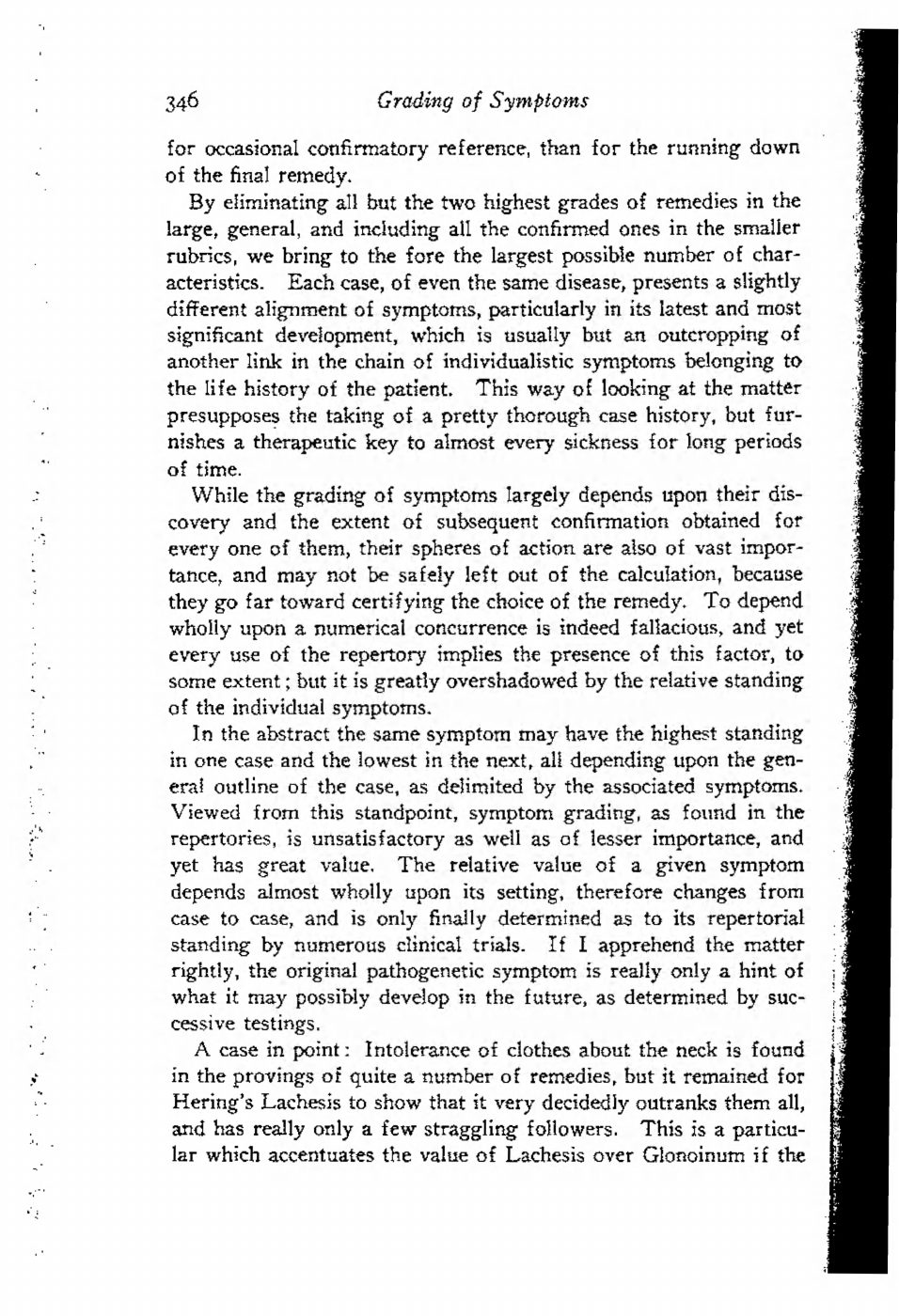
The authors’ objections deserve to be collected alongside their positive rules. Jahr warns against allowing italics to override the totality and against carrying emphasis mechanically from materia medica to repertory. Boger rejects exclusive numerical concurrence. Sherr’s discussion requires counting independent provers rather than treating repeated reports from one person as several witnesses. The Bayesian papers challenge absolute clinical counts without a comparison population and warn against premature translation of estimates into type. None of these cautions is equivalent to rejecting grading altogether. Each identifies a particular misuse. [2] [41] [11] [16] [19]
20. A proposed synthesis preserving the different kinds of evidence
A provisional synthesis follows from these proposals and Roger van Zandvoort’s existing implementation: the literature-derived, separately attributable counts already implement a central part of an inspectable evidence profile. The wider proposal is to retain those counts with their provenance and uncertainty, rather than ask one unexplained number to bear several meanings. This is the present study’s recommendation for discussion, not a consensus attributed to the colleagues. The profile should keep the following questions separately answerable:
- Where did the association come from? Exact source, edition, page, original observation and any transformation into a rubric.
- What kind of support exists? Proving, toxicological observation, clinical report, independent recurrence and the quality of attribution.
- What remains uncertain or contrary? Unreviewed witnesses, conflicting observations, duplication, interpretation and gaps.
- How discriminating is it? Comparative frequency and a predictive estimate only when the populations, definitions and data justify one.
- How does it fit this case? Context, characteristic value and polar contradictions, kept distinct from the strength of the historical evidence.
A simple display could still summarise this profile for practical use, but its meaning and derivation would have to be declared. Where data are absent, the display should say that information is insufficient rather than manufacture a percentage. A historically high grade could coexist with uncertain provenance; an uncommon observation could be characteristic yet weakly verified. Those distinctions are precisely what one composite grade tends to hide.
This builds on the already implemented literature counts and combines them with source traceability, contextual judgement, independent evidence, contrary information and statistical comparison where the required data exist. It does not force them into a universal formula before their relationships have been studied. The next step is to test whether such a profile can consistently explain selected historical associations and make alternative proposals comparable. A comprehensive assessment of Complete Repertory’s grades against this framework remains a later task.
The strongest common thread is the wish to make the limits and comparative usefulness of knowledge visible. Bönninghausen marks doubt and admits imprecision. Jahr distinguishes the direction of comparison. Hering differentiates production, cure and characteristic approval. Kent separates recording, further confirmation and verification. Later authors question inconsistent standards, missed denominators and weak causal attribution. Their differences provide the material from which a future synthesis can be developed.
At this stage, a final numerical synthesis remains a research objective. The provisional evidence-profile proposal above should be examined before choosing a universal scale, which would risk fitting the evidence to a preferred conclusion. A more defensible next foundation is an account of each association’s provenance, observation type, independent recurrence, clinical history, contradictory material and unresolved uncertainty, with the author’s original emphasis preserved.
This is a methodological inference from the collection, not a grading rule already agreed by the cited authors. It would make a later proposal testable: its claims could be compared against actual source histories, rather than merely against existing numerals. Only after that proposal has been developed should its implications be measured against the grading used in Complete Repertory.
A practical proposal: retain the count and describe the evidence beside it
The proposal advanced here is to develop Roger van Zandvoort’s historical case counts into a readable record of evidence for each remedy–symptom association. The count should continue to mean an actual number of independently documented people. It should be accompanied by an assessment of the reports supporting it, rather than altered through hidden quality weights. This would make the record more informative than a single grade while preserving the historical witness and the practical convenience of a concise display.
The first step is to keep the evidence streams distinct: independent provers who experienced the specified symptom; independent people whose corresponding symptom was reported as cured or ameliorated; and toxicological observations where applicable. Five publications repeating one patient remain one clinical case, with five bibliographic witnesses. If a report mentions a group but does not identify how many experienced the actual symptom, the symptom-level count remains unknown. A known minimum may be recorded as a minimum, with the uncertainty stated.
The second step is to describe the support without pretending to know the unpublished experience. Has the original report been recovered? Is the symptom sufficiently specific? Can the people be distinguished? Does a clinical narrative provide a usable treatment sequence and follow-up? Are concurrent treatment, spontaneous change or other explanations addressed? Are there contrary observations or conflicting source interpretations? These questions describe evidence quality; they do not convert a recorded cure into proven causation.
Information shownPurposeIndependent proving and clinical counts, separatelyPreserve the amount and kind of documented supportOriginal sources, dates and symptom wordingAllow the association and its interpretation to be checkedReport assessment and unresolved gapsDistinguish clear documentation from uncertain attributionContrary observations and reasons for revisionAllow evidence to challenge an established interpretationComparative estimate, when justifiedAddress discrimination without inventing denominatorsHistorical grade and its recoverable rationalePreserve the earlier author’s judgement alongside the present assessment
For a constructed example, suppose three independent patients are reported as improved, and their stories appear in five publications. The display would say three reported clinical cases; five publications; two detailed follow-ups and one brief report; total treated population unknown. It would not say five cures, a cure rate, or a probability of success. If one supposed independent report later proves to duplicate another patient, the count is corrected with an explanation. If a genuinely independent case remains but its causal attribution becomes doubtful, its report remains in the historical record and the assessment changes. The existence of the report and confidence in its interpretation are different facts.
A concise repertory display could retain a familiar grade where needed, but let the reader open the underlying count and evidence description. No new universal numerical thresholds are proposed here. Assigning fresh cut-offs before examining their behaviour would repeat the historical problem of an apparently precise scale with an uncertain basis. Source completeness can improve without the count rising; confidence can decrease even while more reports are found.
How to test whether the proposal improves the record
The first test should be historical and editorial: apply the record to selected associations with well-recovered source histories, including strong, weak, duplicated and disputed examples. Independent reviewers should be able to reproduce the counts, identify the same source chains and explain their disagreements about interpretation. The next test is practical: can a reader distinguish repeated publication from independent support, proving from clinical evidence, and missing information from contrary evidence more reliably than with a grade alone?
Claims of better prediction require a separate test using suitable observations withheld from the construction of the prediction rule, with the outcome and comparison defined in advance. Historical traceability cannot substitute for that validation. This proposal is therefore a recommendation for improving transparency and interpretability, not a demonstrated improvement in prescribing outcomes. It combines the strongest usable contributions of the historical authors without claiming that their different criteria already form one validated scale.
21. Remaining historical questions
The present research already establishes that typography and numbers conceal distinct meanings, that several foundational authors acknowledged uncertainty, and that later writers proposed substantially different improvements. It does not establish that every historical rank has a recoverable count, that the proposed quantitative thresholds are validated, or that the literature has converged on one standard.
Further work must recover the earliest grading explanations in their exact editions; follow citations into original proving and case material; compare German originals with French, English and other translations; examine neglected periodical discussions; and incorporate criticism and proposals found in currently unreadable holdings. The article should grow through that evidence, preserving unresolved findings until their witnesses can be examined.
The question is consequently more precise than “What number should a remedy receive?” It is: What does this particular grade claim, what evidence supports that claim, and how openly does it represent what remains uncertain?
22. References and witness notes
References distinguish an original witness, an author’s later exposition, a translation, a publisher’s extract and an abstract-only research record. Dates inferred only from search-engine labels are not treated as publication dates. Where a prReferences include printed page numbers or section titles where available, with links to online sources.
[1] Therapeutisches Taschenbuch
C. M. F. von Bönninghausen. 1846. German
Preface, printed IX–X
Five typographical ranks, brackets for doubt, and acknowledged lack of mathematical precision. English rendering in the article is the present research translation.
[2] Jahr’s New Manual of Homoeopathic Practice, New York repertory, third American from fourth Paris edition
G. H. G. Jahr; American editor A. Gerald Hull. 1850. English translation
Introduction, printed xiv–xv
Contrasts emphasis within a medicine with comparison of medicines under one symptom; cautions about totality and typography.
[3] The Guiding Symptoms of Our Materia Medica, volume I
Constantine Hering. 1879. English
Preface The Arrangement
Light and heavy single/double strokes, separate characteristic hand, and distinct clinical/source symbols.
[4] Lectures on Homoeopathic Philosophy
J. T. Kent. 1919 edition. English
Lectures XXXII–XXXIII; detailed grading in XXXIII, printed pp. 251–252
Recorded, confirmed by further provings, and verified in patients; strongest category termed first grade.
[5] How to Use the Repertory, with a Practical Analysis of Forty Homeopathic Remedies
Glen Irving Bidwell. 1915. English
Grades of Drug Symptoms
Strongest category called first grade; all/majority/few provers.
[6] Introduction to the Therapeutic Pocket Book
H. A. Roberts and Annie C. Wilson. 1935 edition context. English
Evaluation and original preface sections
Allen edition described with five type ranks numbered 5 down to 1; editorial historical claims require earlier witnesses.
[7] Repertory of Hering’s Guiding Symptoms: Preface
Calvin B. Knerr. 1896. English
Preface, marks of distinction
Double light mark allows repeated confirmation or one confirmation consistent with remedy genius; use in groups under general rubrics.
[8] The Encyclopedia of Pure Materia Medica: Introduction
Timothy Field Allen. 1874 volume-I publication context. English
Preparation; editorial contributions
Different observation sources and a clinical-only cipher; named contributors supplied verification emphasis.
[9] Text Book of Materia Medica: Prefaces
A. C. Cowperthwaite. first-edition preface dated 1879; subsequent prefaces included. English
First-edition preface, four groups
Four conceptual groups, two admitted groups, italics for grand characteristics.
[10] Repertory: Prefatory Note
Oscar E. Boericke. June 1927. English
Fifth point
Italics signify more frequently verified clinical remedies; no quantified universal threshold supplied.
[11] The Dynamics and Methodology of Homeopathic Provings
Jeremy Y. Sherr. 1994. English
Printed pp. 25 and 83–87
Frequency/intensity debate, unique prover counting, percentages, rarity, balance, and proposed international code. Original printed typography not visually collated.
[12] Prologue of The Bönninghausen Repertory
George Dimitriadis. online author exposition, 2013 context; exact posting date to verify. English
Remedy Grading; references to SRA 1832
Interprets principal grades as proving recurrence and clinical verification; identifies bracketed uncertainty.
[13] Protologue of The Bönninghausen Repertory
George Dimitriadis. online author exposition, 2013 context; exact posting date to verify. English
Manuscript provenance and removal of additions
Explains manuscript underlinings, source integrity and reassessment of prior additions.
[14] Repertory and likelihood ratio: time for structural changes
A. L. B. Rutten, C. F. Stolper, R. F. G. Lugten, R. W. J. M. Barthels. 2004. English
Homeopathy 93(3):120–124; DOI 10.1016/j.homp.2004.04.005
Proposes LR and systematic materia-medica analysis.
[15] Repertory and the symptom loquacity: some results from a pilot study on likelihood ratio
Rutten and colleagues. 2004. English
Homeopathy 93(4):190–192; DOI 10.1016/j.homp.2004.07.003
Prospective validation and reliable data export.
[16] New repertory, new considerations
A. L. B. Rutten, C. F. Stolper, R. F. G. Lugten and R. W. J. M. Barthels. 2008. English
Homeopathy 97:16–21; DOI 10.1016/j.homp.2007.11.004; printed p. 19, Table 3
Tentative LR bands; authors call translation arbitrary. Original table visually confirms bold LR >6.0. Several Table 2 numerical columns require reconciliation before counts are reused.
[17] Opposite repertory-rubrics in Bayesian perspective
Lex A. L. B. Rutten. 2010. English
Homeopathy 99(2):113–118; DOI 10.1016/j.homp.2010.02.002
Criticises entry accumulation based on absolute occurrence; proposes Bayesian basis.
[18] Frequently occurring polar symptoms assessed by successful cases
Lex A. L. B. Rutten and Heiner Frei. 2012. English
Homeopathy 101(2):103–111; DOI 10.1016/j.homp.2012.02.004
Questionnaires, LR, comparison population and multivariate analysis; recommends further research.
[19] Prospective Evaluation of Few Homeopathic Rubrics of Kent’s Repertory From Bayesian Perspective
Munmun Koley, Subhranil Saha, Kaushik Deb Das, Sushabhan Roy, Rachna Goenka, Pulak Roy Chowdhury, Himangsu Hait, Chapal Kanti Bhattacharyya and Sanjoy Kumar Sadhukhan. online 2015; issue 2016. English
Journal of Evidence-Based Complementary & Alternative Medicine 21(4):277–281; DOI 10.1177/2156587215600561; abstract, conclusions
Investigates discrepancies and refrains from premature LR-to-typeface conversion.
[20] Estimation of the Likelihood Ratio of Different Symptoms for Six Homeopathic Medicines: Prognostic Factor Research
Aditi Mohanta and colleagues. online 2024; issue August 2025. English
Homeopathy 114(3):183–194; DOI 10.1055/s-0044-1787078
Further prognostic-factor research; full text and appraisal pending.
[21] Evaluation of the Modified Naranjo Criteria for Assessing Causal Attribution of Clinical Outcome to Homeopathic Intervention as Presented in Case Reports
Chetna Deep Lamba, Vishwa Kumar Gupta, Robbert van Haselen, Lex Rutten, Nidhi Mahajan, Abdul Motin Molla and Richa Singhal. 2020. English
Homeopathy 109(4):191–197; DOI 10.1055/s-0040-1701251; domains 6A/6B; linked erratum DOI 10.1055/s-0040-1715843
Inter-rater study, weak agreement for direction-of-cure domains; amended wording and further assessment proposed.
[22] MONARCH Inventory for Causal Attribution in Homeopathy Case Reports: Explanation and Elaboration
Chetna Deep Lamba and colleagues. online December 2024; issue August 2025. English
Homeopathy 114(3):173–182; DOI 10.1055/s-0044-1792166
Assesses attribution in clinical reports, not direct repertory grade assignment.
[23] Connaissance du Répertoire de Kent
Robert Séror. web article; exact date unresolved. French
Typographie, degrés, intensité et évolution
Prefers fort/moyen/petit degré and rejects equating degree with intensity. His reference to Lecture XXXIII agrees with the detailed grading passage in the 1919 edition.
[24] Homeopatia e saúde: do reducionismo ao sistêmico
Gilberto Ribeiro Vieira. 2013; full title-page collation pending. Portuguese
Passage on intensidade and frequência
Differentiates intensity vocabulary from proving and clinical frequency.
[25] Homeopathic Method
Jeremy Swayne. edition metadata pending. English
Publisher sample, grading discussion
Questions consistency of grading and position of small remedies; full book pending.
[26] Materia médica de medicinas homeopáticas
S. R. Phatak; Spanish translator to verify. edition metadata pending. Spanish translation
Author’s preface
Low-grade symptom may be most important in a patient; requires original edition comparison.
[27] A homoeopathic proving dissertation: grading-method passage
Author and complete title pending. date unresolved. English
Printed p. 32, Reporting the Data
Reports count and percentage bands attributed to Sherr and Schroyens; identity and original cited edition must be checked.
[28] Review and Revision of Kent’s Repertory in Relation to Other Works
Central Council for Research in Homoeopathy; D. P. Rastogi forewords. 1994; contains foreword dated December 1990. English
Prefatory material
Source-numbered additions, retained italic convention, ordinary-type working-group additions and separate black-point meanings.
[29] About VithoulkasCompass.com; development account
Vithoulkas Compass development team. undated; consulted 2026-10-09. English
Repertory development and testing
Claims for consistency, selected sources and case benchmarking; performance assertions not independently assessed.
[30] Acide gamma-aminobutyrique [GABA]: proving report
P. Souk-Aloun and reported proving groups. date unresolved. French
II. Symptômes pathogénétiques recueillis
Two-level plausibility/emphasis convention with prover and timing references.
[31] Choix informatique du remède
P. Souk-Aloun. date unresolved. French
III. Transposition à l’Homéopathie
Proposes approximate transformation of qualitative degrees into frequency percentages.
[32] Natural Therapies Review 2024: Homeopathy evidence evaluation, Appendices A–C
Australian Government Department of Health. 2024 review; issued 2025. English
Appendix B4, evidence statements and GRADE
Certainty across research comparisons/outcomes, separate from remedy–symptom grades.
[33] Systematic reviews and meta-analyses in Homeopathy: Recommendations for summarising evidence from homeopathic intervention studies (Sum-HomIS recommendations)
Katharina Gaertner, Susanne Ulbrich-Zürni, Stephan Baumgartner, Harald Walach, Michael Frass and Petra Weiermayer. 2023. English
Complementary Therapies in Medicine 79:102999; DOI 10.1016/j.ctim.2023.102999; abstract, five recommendations
Broad search, grey literature, study designs, validity and conditional use of GRADE.
[34] Updating the Homeopathic Algorithms: Handling Confirmation Bias
Lex Rutten, Rainer Schäferkordt, José E. Eizayaga. online 2025; issue May 2026. English
Homeopathy 115(2):101–110; DOI 10.1055/a-2606-4041; abstract and methods
Analyses 731 selected best chronic cases and historical materia medica likelihood-ratio distributions. Proposes partial bias corrections using theoretical considerations, expert judgement and mathematics; comparative performance remains unestablished.
[35] Introduction to Jeremy Sherr’s Repertory of Mental Qualities
Jeremy Sherr. date unresolved. English
Remedy grading legend
Experimental and stronger categories need full legend retrieval before inclusion in historical account.
[36] Homöopathische Fallanalyse
Bleul and colleagues; chapter attribution to verify. 2012 publisher extract. German
Printed p. 42, Table 3.1
Shows 0–4, and notes clinical-only symptoms can occur in higher ranks; exact editor/chapter metadata pending.
[37] Los cuatro grados de Bönninghausen
Instituto de Medicina Homœopática América Latina. 20 December 2015 displayed URL. Spanish
Discussion of principal ranks and brackets
Reception and teaching account; not independent evidence for each attributed historical claim.
[38] Diagnosi: metodologia diagnostica omeopatica
Author attribution pending. September 1999 issue context. Italian
Discussion of disagreement over symptoms and importance
Describes disagreement over symptom selection and weighting.
[39] Glossary: symptom hierarchy and ranking
yourdoctor.su; author attribution pending. undated. Russian
ИЕРАРХИЯ СИМПТОМОВ; РАНЖИРОВАНИЕ СИМПТОМОВ
Distinguishes grading by significance and ranking for repertorisation; not a remedy-grading standard.
[40] लक्षण से औषधि खोज: explanation of Boericke and Kent grades
ThinkHomeo. undated. Hindi and English
Grade tags and tool explanation
Example of bilingual contemporary presentation; combined scores are tool conventions and not independent confirmation.
[41] Grading of Symptoms
C. M. Boger. 1926 publication; presented June 1925. English
The Homœopathic Recorder 41:345–347
Critiques numerical concurrence and fixed symptom values; gives neck-clothing and thermal-context example.
[42] Repertories
C. M. Boger. 1925. English
The Homœopathic Recorder 40:365–366
Closely related text to the subsequent Grading of Symptoms; edition relationship requires detailed collation.
[43] New Materia Medica
D. A. Pulford and D. T. Pulford. 1926. English
The Homœopathic Recorder 41:347–350; notation explained pp. 348–349
First/highest-grade selection with distinct bracket, parenthesis and plus-sign conventions; authors’ reliability claims are not independent verification.
[44] Simplified Repertory of First Grade Remedies
P. Sivaraman. 1994. English
B. Jain; ISBN 81-7021-401-7; preface dated 6 March 1994
Uses Kentian grading and selects its first/highest, bold-type remedies; author explicitly retains the usefulness of omitted lower grades.
[45] Adding and Grading
Ramanlal P. Patel. 2008. English
Homoeopathic Links 21(4):211–214
Priority lead on rules for additions and grading; publisher retrieval failed and no argument is treated as established here.
[46] Die Wertung der Symptome in Kent’s Repertorium
Julius Mezger. 1963. German
Zeitschrift für Klassische Homöopathie 7(3):97 onwards; ending page pending
Priority German discussion of symptom valuation in Kent.
[47] Die Wertung der Symptome in Kent’s Repertorium: continuation
Julius Mezger. 1964. German
Zeitschrift für Klassische Homöopathie 8(1):32 onwards; ending page pending
Continuation must be assessed together with 1963 article.
[48] Paragraph 136 des Organon und die Wertung der Symptome
Horst Barthel. 1964. German
Zeitschrift für Klassische Homöopathie 8(3):125 onwards; ending page pending
Priority lead linking symptom valuation to Organon §136.
[49] Diskussion über die Wertigkeit und vergleichende Bewertung der Symptome: Zur Werthierarchie in der homöopathischen Arznei-Symptomatik
H. Ortloff. 1964. German
Allgemeine Homöopathische Zeitung 209(8):384–398; register also points to H. Gross, 1895, 131(11–12):87–91
Original article and referenced debate not yet read.
[50] In search of the reliable repertory
Ben Gadd. 2009. English
Homeopathy 98(1):60–64; DOI 10.1016/j.homp.2008.11.004; abstract and introduction
Context, semantics, translation and different understandings of evidence complicate uniform reliability standards.
[51] Credere o non credere nell’Omeopatia?
Beatrice Andreoli. April 2019. Italian
Il Medico Omeopata 70, printed pp. 24–27; example printed p. 26
Blue-glasses example rejects attributing every feature of an improved patient to the prescribed remedy; present English paraphrase is research translation.
[52] Repertory of the Homoeopathic Materia Medica, 1897, volume I
J. T. Kent. 1897. English
Lancaster, Pa.: Examiner Printing House; preface scalp perspiration printed p. 222
Admission and expansion principles, but no explicit grade-assignment protocol in checked preface; Anacardium is visibly in highest type under scalp perspiration.
[53] Repertory of the Homoeopathic Materia Medica, 1897, volume II
J. T. Kent. 1897. English
Rattling respiration printed p. 747
Kali sulphuricum is visibly in highest type; page does not identify the evidence or reason for its grade.
[54] Repertory of the Homoeopathic Materia Medica, 1899 title-page witness
J. T. Kent. 1899 title page; copyright 1897. English
Lancaster, Pa.: Examiner Printing House; preface
Checked preface closely follows 1897 text; title-page year alone does not establish a revised edition.
[55] The Development and Formation of the Repertory
J. T. Kent. 1914 publication attribution; original journal collation pending. English
Reproduced in Currim, Guide to Kent’s Repertory (1996), pp. 227–230; especially p. 228
Kent describes compilation and screening clinical symptoms against provings. Does not supply a documented conversion table for predecessor grades.
[56] A Bayesian perspective on the reliability of homeopathic repertories
A. L. B. Rutten, C. F. Stolper, R. F. G. Lugten and R. W. J. M. Barthels. 2006. English
Homeopathy 95(2):88–93; introduction and typeface proposal
Explicit criticism of missing explanation in Kent’s preface; proposes relative occurrence, LR and consideration of absent symptoms, with tentative typeface bands.
[57] Archive for Homeopathy
Rob Willemse. 15 March 2009 displayed publication date. English
Examples of unclearness of the grades; Essential features of the repertory
Anacardium and Kali sulphuricum criticisms are investigation leads, not fully established source-chain findings. Dynamic formula-derived grading is proposed; formulas not disclosed on inspected page.
[58] Guide to Kent’s Repertory
Ahmed N. Currim. 1996. English
Symptom grades, printed p. 12; Kent appendix pp. 227–230
Later exposition includes additions to the lecture wording; distinguish Currim’s interpretation from Kent’s exact text.
[59] Repertory of the homoeopathic materia medica: 3rd revised edition, catalogue record
J. T. Kent; Wellcome Collection catalogue. 1924. English
Chicago: Ehrhart & Karl; xiv, 1423 pages; edition 3rd rev. ed.
Establishes edition identity of a later witness; no inference about its grading preface is made without inspecting the book.
[60] Repertory of Mental Qualities
Jeremy Sherr. 15 March 2009 displayed publication date. English
A new repertory; Primary rubrics; Accuracy
Inclusive main rubrics with narrower primary selections, source checking and thematic importance; explicitly retains highest degrees.
[61] Polarity analysis, a new approach to increase the precision of homeopathic prescriptions
Heiner Frei. 2009. English
Homeopathy 98(1):49–55; principles and Table 4
Uses grades for symptom poles and their opposites; alternative to simple grade sums, not abolition of grading. DOI verified in the title-page text.
[62] New Remedies, Clinical Cases, Lesser Writings, Aphorisms and Precepts
J. T. Kent; collected volume. 1926 edition. English
Use of the Repertory; clinical notes, Rattling in Chest—Kali Sulph., printed pp. 564–565
The rattling cases are traced to original publication in May 1884, pp. 129–130, source [72]. The 1926 collection is not the earliest witness or additional patients; no explicit 1897 grade decision is supplied.
[63] Internal historical case-count policy and grading inputs (descriptive reference)
Roger van Zandvoort; project documentation. documented September 2026; consulted 9 October 2026. English
Modern Proving Count Rule; Grade Input Rule; Canonical Scope
Literature-derived, source-specific counts of distinct provers and cured people; excludes inherited source grades as new grading inputs and duplicate manifestations as independent witnesses.
[64] Grading-policy formula record
Roger van Zandvoort. 26 September 2026; formula record dated 27 May 2026. English
Recorded rules governing grade calculation and historical-grade preservation
Count-to-grade bands and historical override/preserved-grade behaviour remain distinguishable from the evidence counts themselves.
[65] Source-specific literature counts in Curar
Curar application of Roger van Zandvoort’s literature-evidence method. consulted 9 October 2026. English
Separate proving, cured, phytotherapy, repertory and unspecified evidence counts
Reads proving, cured, phytotherapy, repertory and unspecified count lanes separately; stored and adjusted fields and grade remain distinct.
[66] Definition and scope of historical case counts
Roger van Zandvoort. 9 October 2026. English
Personal communication in this research conversation
Personal clarification: Roger van Zandvoort began applying his internal historical case-count method in the early 2000s, primarily for reasons of practicability, extracting independent cases from published books and periodicals worldwide. Not all practice experience has been published or recovered; counts do not represent absolute cured-case totals. He also reports that the method is now producing repertory grade changes. Establishes his account of purpose and application, not independently dated promotion events or validated comparative performance.
[67] Repertory: enriched Indian edition, reprint from sixth American edition; retained third-edition publisher preface
J. T. Kent; Ehrhart & Karl; B. Jain Publishers. later reprint, date not established; retained third-edition preface. English
Title page; printed viii; adjacent fourth-edition note dated January 1935
Third-edition publisher text attributes revision and verification claims to Kent and credits Clara Louise Kent with proof supervision. No operational grading protocol in that preface. This is not the original 1924 printing.
[68] Die chronischen Krankheiten, volume II, second enlarged edition
Samuel Hahnemann. 1835. German
Printed p. 188; symptoms 616 and 618
Original German head versus forehead and cool versus warm perspiration inspected. No prover initial printed after symptom 616.
[69] The Encyclopedia of Pure Materia Medica, volume I: Anacardium
Timothy Field Allen. 1874. English
Printed pp. 312 (authorities), 327 (perspiration)
Head-perspiration text attributes authority to Hahnemann; transmission does not constitute an independent confirmation.
[70] Systematisch-alphabetisches Repertorium der antipsorischen Arzneien
C. M. F. von Bönninghausen. 1833. German
Printed p. 26; external head complaints, sweat
Printed list inspected: no Anacardium in this rubric. Does not establish the contents of an annotated manuscript copy.
[71] Repertory to the More Characteristic Symptoms of the Materia Medica
C. von Lippe. 1880. English
Printed p. 35; Scalp, Perspiration
Anacardium appears in upright type. Confirms pre-Kent rubric membership; no patient evidence or Kent promotion decision is supplied.
[72] Clinical Notes
J. T. Kent. May 1884. English
The Homœopathic Physician 4:129–130
Original pages visually inspected. Two distinct children with rattling; establishes publication before 1897. Later collected printing is not two additional patients.
[73] The Encyclopedia of Pure Materia Medica, volume V: Kali sulfuricum
Timothy Field Allen. 1877. English
Printed p. 387; title-page year 1877
The title page dates this volume to 1877. Five exposure authorities are not five healthy provers; no respiratory rattling appears in this entry. Distinguish adjacent Kali sulfuratum.
[74] The Characteristics of Ten Tissue Remedies
Edmund J. Lee. April 1888. English
The Homœopathic Physician 8(4):169–178; relevant pp. 173–174
Original discussion of inadequate proving and clinical rattling-cough use. Following Wesselhoeft cases concern nasal disease. Corrects the volume/issue citation in Willemse.
[75] The Guiding Symptoms of Our Materia Medica, volume VI: Kali sulphuricum
Constantine Hering; continuation edited by C. G. Raue, C. B. Knerr and C. Mohr. 1888. English
Copyright; printed pp. 471–476; rattling and coarse rales p. 473
Filename year 1879 is misleading for this volume. Chapter says Needs proving while marking clinical respiratory symptoms. No documented Kent grade conversion.
[76] Asthma, in Miscellany
M. E. Douglass. 1895. English
The Homœopathic Recorder 10:279; credited to So. Jour. of Hom.
One adult patient with asthma and rattling mucus; next-day improvement reported by wife. Original Southern Journal issue not recovered; no long-term cure documented.
[77] Repertory of Hering’s Guiding Symptoms: cold sweat with internal heat
Calvin B. Knerr. 1896. English
Printed p. 1112; Fever, cold sweat
Anacardium entry has no preceding confirmation stroke on the inspected page; cannot convert omitted mark into a numerical zero.
[78] Complete Repertory 2027 comparison data
Roger van Zandvoort. prepared 10 August 2026; examined 9 October 2026. English
Three compared rubric–remedy entries and their cited source records
All three entries have grade 3 with cured count 1 and prover count 1. The comparison concerns the edition prepared on 10 August 2026 and does not claim equivalence to every distributed build. Source 20991 gives the year 1984, while the article itself is dated July 1987.
[79] Two acute cases
Klaus-Henning Gypser. July 1987. English
British Homoeopathic Journal 76:145–146; case 1, p. 145
One woman aged 44 with forehead pain extending to nose root; headache absent next morning after Nux vomica. One patient supports two nested rubric comparisons, not two independent confirmations. Article heading corrects the CR2027 source-index year 1984.
[80] Severe Tinnitus in a Man of 48
Ingrid Frohne. 18 September 2021. English
Medical history; December 2014 prescription; follow-up February–July 2015 and August 2021
Right-eye migraine is recorded in earlier history; the reported treatment outcomes concern tinnitus. Does not independently verify cure of the headache. CR2027 source 21467.
[81] Repertory, original volume I: forehead-pain comparison entries
J. T. Kent. 1897. English
Printed pp. 164–165: forehead pain extending to nose and nose root; above right eye
Nux vomica is plain upright in both nose-extension rubrics on p. 164; Lachesis is plain upright in above-right-eye rubric on p. 165. Images retained beside article.
[82] Materia Medica Pura, volume II, Dudgeon translation with Hughes annotations
Samuel Hahnemann; translated by R. E. Dudgeon. 1881. English translation
Nux vomica, printed p. 227, symptoms 63 and 74
Earlier proving-language witness for head pain to nose root and drawing from forehead towards nose root; cited by Gypser. These passages do not establish an independently identified person for each entry.
Add comment
Comments